
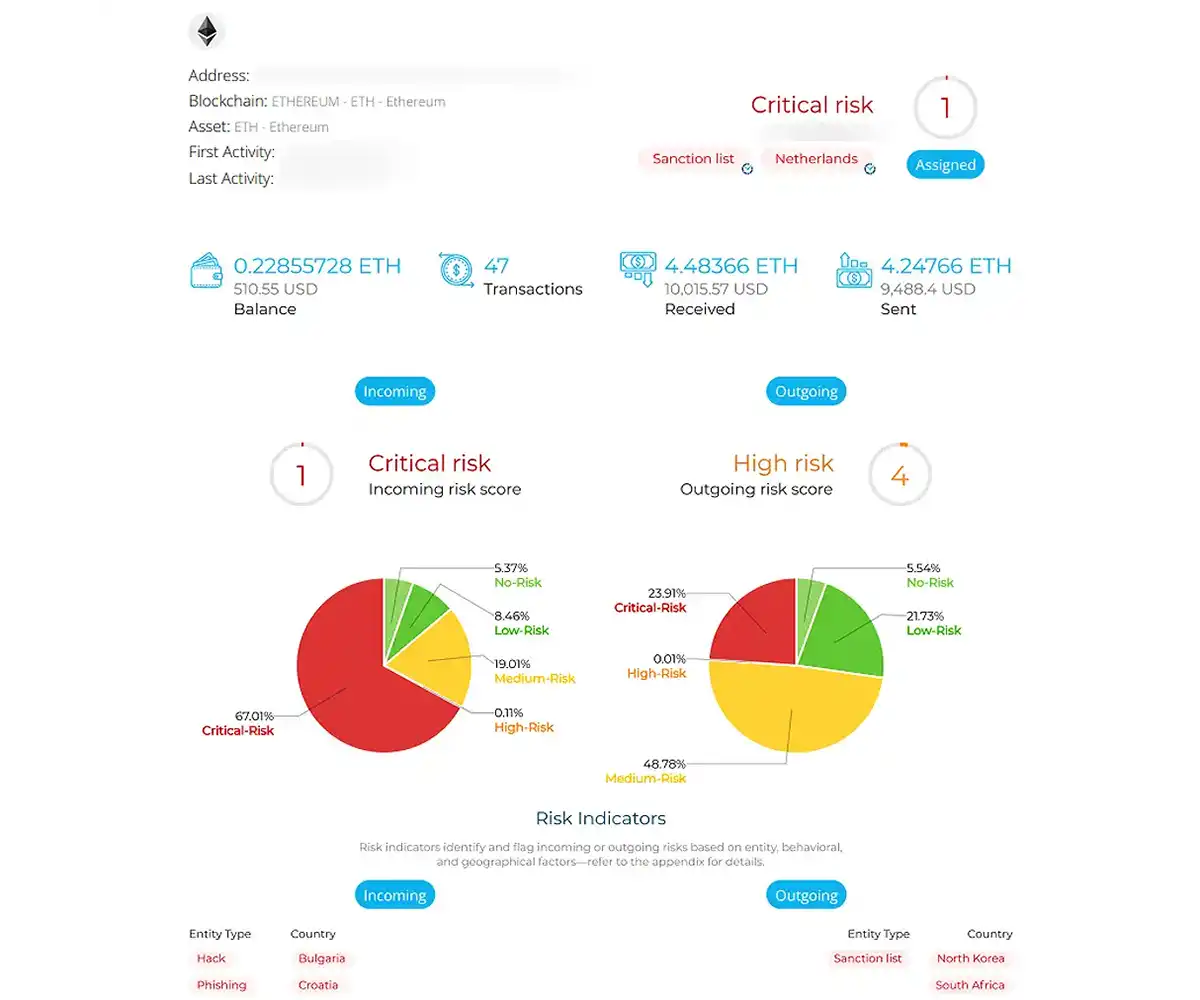
Define KYT graph analytics
Know Your Transaction (KYT) analytics differ fundamentally from the traditional Know Your Customer (KYC) model. While KYC verifies identity at onboarding, KYT monitors the movement of assets in real time. This distinction is critical for DeFi compliance, where pseudonymous wallets replace verified identities as the primary unit of transactional activity.
KYT graph analytics applies network theory to blockchain data. Instead of viewing transactions as isolated events, this approach maps connections between wallets, exchanges, and smart contracts. By analyzing these relationships, compliance teams can identify patterns indicative of money laundering, sanctions evasion, or market manipulation.
The technical foundation of KYT graph analytics lies in its ability to trace fund flows across multiple hops. When a suspicious transaction occurs, the system does not just flag the immediate sender or receiver. It reconstructs the entire path of funds, revealing hidden intermediaries and complex layering techniques used to obscure the source of assets. This depth of visibility is what separates simple transaction tracking from robust graph-based compliance.
For regulatory bodies and financial institutions, this capability shifts the burden of proof. Rather than reacting to known bad actors, KYT systems proactively identify high-risk clusters and anomalous behaviors. This proactive stance is essential in a landscape where regulatory scrutiny is increasing and the cost of non-compliance continues to rise.
Why Real-Time Monitoring Is Critical for DeFi Compliance
Decentralized finance operates at a velocity that traditional financial systems cannot match. In DeFi, capital moves across multiple blockchains in seconds, often through complex, automated smart contracts. This speed creates a significant vulnerability for compliance teams: by the time a transaction is confirmed and recorded on a ledger, illicit funds may have already been laundered through several layers of mixing services or cross-chain bridges.
Real-time transaction monitoring is not merely a convenience; it is a regulatory necessity. Without the ability to analyze transactions as they are broadcast to the mempool, compliance protocols are effectively reacting to history rather than preventing future harm. The risk is twofold. First, the sheer volume of cross-chain activity makes manual auditing impossible. Second, the anonymity provided by privacy-preserving tools allows bad actors to obscure the origin of funds, making post-hoc analysis increasingly difficult and often futile.
Regulators are increasingly scrutinizing the "gatekeeper" role of DeFi interfaces and wallets. The expectation is that entities facilitating access to decentralized protocols will implement robust screening mechanisms. This means monitoring must occur at the point of entry, flagging suspicious activity before it is executed. Failure to do so exposes platforms to significant legal liability and reputational damage.
The scale of this challenge is evident in the current market dynamics. The following chart illustrates the volatility and volume of transaction activity in the broader crypto market, highlighting the immense pressure on monitoring systems to process data without latency.
To maintain compliance in this environment, organizations must prioritize infrastructure that can handle high-throughput data streams. The cost of inaction is measured in regulatory fines, frozen assets, and loss of user trust. As the DeFi ecosystem matures, the distinction between "decentralized" and "unregulated" will become legally clearer, placing the onus on developers and operators to build compliance into the core architecture of their products.
Top KYT graph tools for 2026
Selecting the right KYT graph tool requires matching specific compliance mandates with technical capabilities. In 2026, platforms must offer real-time transaction monitoring, comprehensive DeFi protocol support, and robust API integration to satisfy regulatory scrutiny. The following tools represent the current standard for high-stakes risk management.
Chainalysis KYT
Chainalysis remains the primary reference for institutional compliance, offering deep transaction graph analysis and extensive regulatory reporting features. Its platform provides granular risk scoring and supports a wide range of blockchain networks, making it suitable for enterprises requiring strict adherence to global AML standards. The tool excels in providing clear audit trails for law enforcement inquiries.
Elliptic
Elliptic specializes in real-time crypto transaction monitoring with a strong focus on DeFi and NFTs. Its risk scoring engine updates dynamically, flagging suspicious activity across complex transaction chains. Elliptic is particularly effective for organizations needing to monitor decentralized exchanges and smart contract interactions, offering detailed visualization of fund flows.
TRM Labs
TRM Labs provides advanced graph analytics with a focus on predictive risk modeling. Its platform integrates seamlessly with existing compliance workflows and offers customizable alerting based on specific risk thresholds. TRM Labs is favored for its ability to trace funds across multiple chains and identify hidden connections between addresses, enhancing investigative capabilities.
Lookonchain
Lookonchain offers real-time on-chain intelligence and alerts for whale movements and large transactions. While less focused on traditional AML compliance, it provides valuable insights for market surveillance and risk awareness. Its API allows for custom monitoring of specific addresses or contracts, making it a useful supplementary tool for liquidity risk management.
Feature Comparison
| Provider | Real-Time Latency | Supported Chains | API Capabilities |
|---|---|---|---|
| Chainalysis | < 1 second | 20+ | RESTful, Webhooks |
| Elliptic | < 1 second | 15+ | GraphQL, REST |
| TRM Labs | < 1 second | 10+ | RESTful |
| Lookonchain | Near real-time | 5+ | RESTful |

Amazon does not offer specialized KYT graph analytics software. Compliance teams should evaluate enterprise licensing directly from providers to ensure proper support and integration.
Integrating KYT with DeFi protocols
Integrating Know Your Transaction (KYT) systems into decentralized finance (DeFi) infrastructure requires bridging the gap between immutable blockchain ledgers and traditional financial compliance frameworks. Unlike centralized exchanges, DeFi protocols operate on open-source smart contracts, meaning transaction monitoring must occur at the node level or through specialized RPC endpoints rather than within a proprietary database.
The integration process begins with selecting a KYT provider that offers robust API support for the specific blockchain networks in use, such as Ethereum, Solana, or Polygon. Developers must configure the node to stream real-time transaction data to the KYT engine. This setup typically involves setting up webhooks or polling mechanisms that trigger compliance checks before a transaction is finalized or after it is broadcast to the mempool. The goal is to flag addresses associated with sanctioned entities, mixers, or high-risk protocols before they interact with the DeFi platform.
Operational integration also demands careful handling of false positives and user experience. DeFi users value anonymity and speed, so compliance checks must be optimized for latency. Implementing tiered risk assessments allows legitimate users to proceed with minimal friction while restricting high-risk interactions. For instance, a user interacting with a known sanctioned address might be blocked entirely, while a user with a moderate risk score might be required to complete additional identity verification steps. This balance is critical to maintaining regulatory compliance without driving users away from the protocol.
Finally, continuous monitoring and feedback loops are essential. As new threats emerge, such as novel mixing techniques or cross-chain bridge exploits, the KYT risk models must be updated regularly. This requires a dedicated team to analyze flagged transactions, refine risk parameters, and ensure the integration remains aligned with evolving regulatory standards. The integration is not a one-time setup but an ongoing operational requirement to safeguard the protocol against regulatory scrutiny and financial crime.
DeFi Compliance Risks and Mitigation
The decentralized finance (DeFi) ecosystem operates on permissionless protocols, creating a regulatory blind spot for traditional compliance frameworks. Without real-time transaction monitoring, exchanges and service providers face significant exposure to illicit activities embedded within complex transaction flows. The primary risks stem from the anonymity features of privacy coins, the obfuscation techniques of mixers, and the liquidity fragmentation across cross-chain bridges.
Mixers and tumblers are designed to sever the link between a transaction's origin and destination. When funds pass through these services, the audit trail becomes fragmented, making it difficult for compliance teams to identify the ultimate beneficial owner. Similarly, cross-chain bridges, which facilitate the transfer of assets between different blockchain networks, often lack standardized monitoring protocols. This fragmentation allows bad actors to exploit gaps between chains, moving illicit funds through multiple networks before they reach a centralized exchange or liquidity pool.
KYT graphs mitigate these risks by visualizing transaction flows in real time. Instead of analyzing isolated transactions, compliance teams can trace the entire path of funds across multiple hops and protocols. This graph-based approach allows for the detection of patterns associated with money laundering, such as layering and integration, even when funds are routed through several intermediary wallets or smart contracts.
The financial scale of potential compliance breaches underscores the urgency of robust monitoring. To understand the magnitude of assets at risk, consider the market volatility and volume of major DeFi tokens. A breach involving high-value stablecoins or governance tokens can result in significant regulatory fines and reputational damage.
Regulatory bodies are increasingly targeting DeFi intermediaries for failing to implement adequate Anti-Money Laundering (AML) controls. By integrating KYT graph technology, organizations can demonstrate due diligence and provide regulators with transparent, auditable records of transaction monitoring. This proactive approach not only mitigates legal risk but also enhances trust within the broader financial ecosystem.
Helpful gear
Use these product recommendations as a starting point, then choose the size, material, and price point that fit how you actually use the gear.



As an Amazon Associate, we may earn from qualifying purchases.
No comments yet. Be the first to share your thoughts!