
Kyt monitoring choices that change the plan
Choosing the right KYT (Know Your Transaction) strategy involves balancing detection accuracy against operational friction. Unlike KYC, which verifies identity at onboarding, KYT monitors the flow of funds in real time. This distinction matters because crypto transactions are pseudonymous and irreversible. A false positive can freeze legitimate user funds, while a false negative exposes the platform to regulatory penalties.
The core tradeoff lies in how aggressively you apply risk scoring. High-sensitivity models catch illicit activity early but generate more alerts for compliance teams to review. Lower-sensitivity approaches reduce ticket volume but risk missing sophisticated layering techniques. Most platforms now use AI-driven clustering to group related transactions, improving signal-to-noise ratios.
| Feature | High Sensitivity | Low Sensitivity |
|---|---|---|
| False Positive Rate | High | Low |
| Fraud Detection | Immediate | Delayed |
| Compliance Load | Heavy | Light |
| User Experience | Friction-heavy | Smooth |
For high-risk exchanges, the cost of a breach outweighs the cost of manual review. In these cases, prioritize comprehensive monitoring over speed. For consumer-facing wallets, user experience is paramount. Here, a lighter touch with automated whitelisting often serves better.
| Metric | KYT Focus | KYC Focus |
|---|---|---|
| Primary Goal | Monitor transaction risk | Verify user identity |
| Timing | Real-time/on-chain | At onboarding |
| Data Source | Blockchain addresses | Personal documents |
| Regulatory Basis | AML transaction monitoring | Customer Due Diligence |
| Key Risk | Missing illicit flows | Identity fraud |
When evaluating vendors like Chainalysis or Persona, look for real-time API latency and historical data depth. The best KYT tools integrate directly with your transaction engine, allowing for automatic holds or flags without manual intervention. Remember that KYT is not a standalone solution; it complements KYC by providing continuous oversight of the assets you have already verified.
Where each option wins
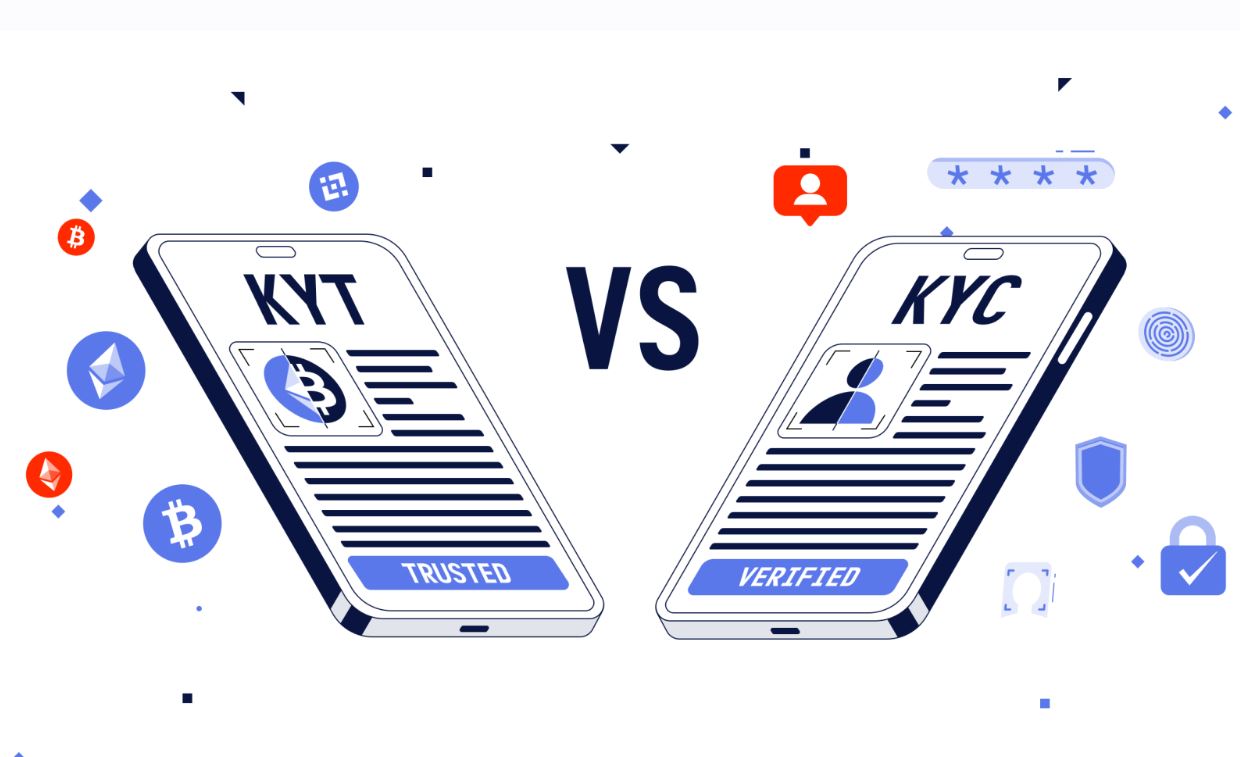
KYC and KYT serve different phases of the compliance lifecycle. Know Your Customer (KYC) is the gatekeeper that verifies identity at onboarding. Know Your Transaction (KYT) is the continuous monitor that assesses risk in real time. Choosing the right tool depends on whether you need to identify a user or track their assets.
KYC: Best for Identity Verification
KYC is your first line of defense against fraud and regulatory violations. It answers the question: Who is this person?
Use KYC when you need to:
- Verify government-issued IDs and biometrics during sign-up.
- Perform sanctions screening (OFAC, PEPs) before allowing access.
- Meet regulatory requirements for account opening.
KYC is static. Once a user is verified, the data sits in your database until it expires or needs renewal. It does not monitor what the user does with their funds.
KYT: Best for Real-Time Risk Monitoring
KYT analyzes the blockchain. It answers the question: Is this transaction risky?
Use KYT when you need to:
- Screen incoming and outgoing transactions against threat databases.
- Detect interactions with mixers, darknet markets, or sanctioned addresses.
- Trigger alerts or freezes for suspicious activity.
Tools like Chainalysis KYT monitor on-chain activity continuously. This is critical for crypto-native businesses that handle high volumes of transactions where identity alone doesn't indicate risk.
The Tradeoff: Static vs. Dynamic
| Feature | KYC | KYT |
|---|---|---|
| Focus | Identity (Who) | Activity (What) |
| Timing | Point-in-time (Onboarding) | Continuous (Real-time) |
| Data Source | Documents, Biometrics | Blockchain ledgers, Wallet addresses |
| Primary Risk | Fake IDs, Synthetic identities | Illicit funds, Sanctions evasion |
For most compliance programs, neither option is sufficient alone. KYC ensures you know who you are dealing with; KYT ensures those users aren't moving dirty money. Integrating both creates a robust defense against financial crime.
Details worth checking
KYC and KYT are not interchangeable, and assuming they are can leave your platform exposed to compliance gaps. KYC verifies identity at onboarding, while KYT monitors on-chain risk in real time. Both are required for a complete AML program, but each has specific limitations you must verify before relying on them.
KYC providers rely on databases that may lag behind real-world changes. A user’s status can change after verification, but your KYC provider might not update their records immediately. Always check if your provider offers continuous monitoring or if you need to re-verify periodically.
KYT tools like Chainalysis KYT or Persona’s transaction monitoring assign risk scores based on blockchain data. These scores are not perfect; they can flag legitimate activity as suspicious (false positives) or miss sophisticated laundering (false negatives). Test your provider’s accuracy against known illicit addresses before committing.
KYC rules vary by jurisdiction (e.g., EU’s MiCA, US FinCEN guidance). KYT is an industry standard, not a law, but it is often required to satisfy KYC obligations. Ensure your KYT provider’s risk models align with the specific regulations applicable to your business operations.
No comments yet. Be the first to share your thoughts!