
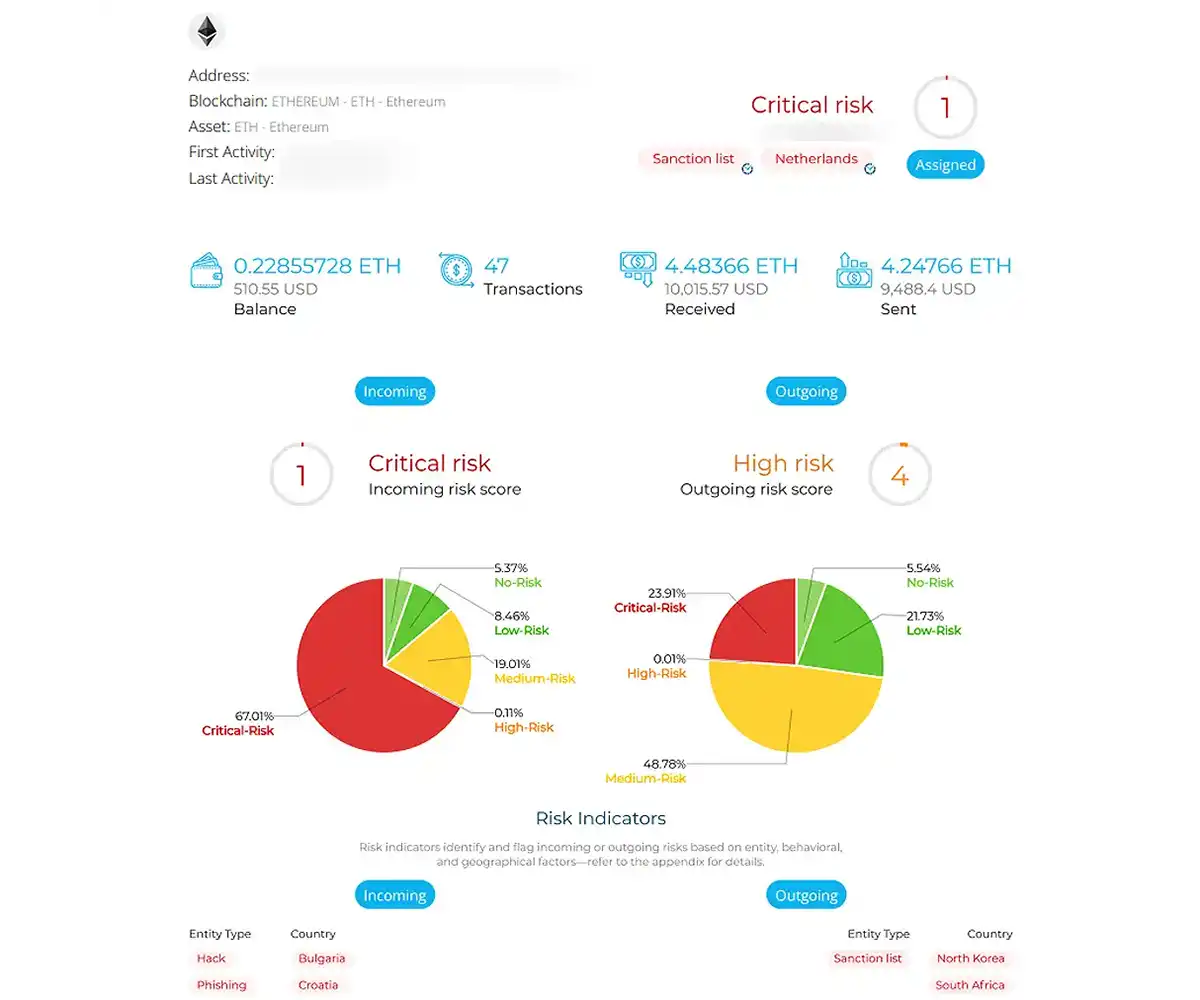
Defining the KYT Graph in AML
Traditional compliance relies on KYC (Know Your Customer), which verifies identity at the point of entry. It answers the question: Who is this person? However, identity verification alone is insufficient for modern anti-money laundering (AML) efforts. Criminals frequently rotate identities or use synthetic personas to bypass static checks. This is where KYT (Know Your Transaction) shifts the focus from identity to behavior.
KYT utilizes graph analytics to trace the flow of funds across blockchain networks in real time. Instead of waiting for a transaction to settle and then reviewing it, KYT systems monitor on-chain activity as it happens. They map connections between wallets, identifying clusters that exhibit suspicious patterns, such as mixing services, darknet markets, or sanctioned entities. This approach allows financial institutions to detect illicit activity before funds are fully integrated into the traditional banking system.
Key distinction: KYC verifies who you are; KYT Graph tracks where your money goes in real time.
The regulatory landscape increasingly demands this transaction-level visibility. The Financial Action Task Force (FATF) Recommendation 15 emphasizes the need for Virtual Asset Service Providers (VASPs) to monitor transactions for AML/CFT compliance. Major compliance vendors like Chainalysis and Elliptic have built their core offerings around this real-time graph analysis, enabling proactive blocking of illicit funds within seconds of a transaction occurring on-chain.
By integrating KYT Graph analytics, institutions move from reactive reporting to proactive prevention. This distinction is critical for 2026 compliance frameworks, where the speed of blockchain transactions outpaces manual review processes.
Real-Time Detection Mechanics
Know Your Transaction (KYT) systems operate by mapping the entire on-chain history of an address rather than treating each transfer as an isolated event. Traditional banking compliance often relies on batch processing or delayed reporting, but crypto markets never sleep. To meet regulatory expectations set by bodies like the FATF, KYT platforms must identify illicit connections instantly, flagging suspicious activity before a transaction settles or funds are moved further through the network.
At the core of this capability is the graph database. Unlike relational databases that store data in rigid tables, graph databases represent entities as nodes and their relationships as edges. In the context of AML, every wallet address is a node, and every transaction is an edge. When a user initiates a transfer, the KYT engine traverses this graph in real time, looking for links to addresses previously flagged for sanctions, mixers, or darknet markets. This structural analysis allows compliance officers to see not just who sent the funds, but the broader network of influence and exposure surrounding the transaction.
The speed of this detection is critical. Major vendors like Chainalysis and Elliptic generate alerts within seconds of a transaction occurring on-chain. This rapid detection enables proactive blocking or enhanced due diligence before the funds are laundered across multiple hops. For legal and compliance officers, this means shifting from reactive investigation to proactive prevention, ensuring that VASPs remain compliant with global AML/CFT frameworks in real time.
Regulatory Alignment and FATF Standards
VASPs operate in a regulatory environment where ambiguity is no longer a viable strategy. The FATF Recommendation 15 explicitly requires countries to regulate virtual assets and VASPs in line with traditional financial institutions. For compliance officers, this means Know Your Transaction (KYT) tools are not optional add-ons; they are the technical mechanism required to satisfy these global Anti-Money Laundering and Counter-Financing of Terrorism (AML/CFT) frameworks.
KYT solutions enable real-time transaction monitoring, generating alerts within seconds of on-chain activity. This speed is critical for meeting the "travel rule" requirements, where VASPs must share originator and beneficiary information for transfers above specific thresholds. Without automated graph analytics, manually tracing fund flows to identify illicit entities like mixers or sanctioned addresses is impossible at scale. Tools such as Chainalysis KYT provide the necessary visibility to flag high-risk addresses before funds are settled, ensuring proactive rather than reactive compliance.
Adhering to FATF standards also involves maintaining an audit trail that demonstrates due diligence. Graph analytics visualize the connections between addresses, allowing compliance teams to prove that they have screened counterparties against sanctions lists and known bad actors. This capability protects VASPs from regulatory penalties and reputational damage. As global regulators tighten scrutiny, the ability to instantly validate transaction integrity becomes the primary differentiator between compliant institutions and those facing enforcement actions.
1. Chainalysis KYT
Chainalysis KYT serves as the industry benchmark for real-time transaction monitoring. The platform continuously scans the blockchain, generating alerts within seconds of a transaction occurring on-chain. This rapid detection capability allows compliance teams to block suspicious activity before funds settle, a critical requirement for meeting FATF Recommendation 15 standards for VASPs.
KYT integrates directly into exchange deposit workflows and custodial interfaces. It provides deep attribution data, linking wallet addresses to known entities such as darknet markets, ransomware groups, or sanctioned jurisdictions. The system’s API allows for automated decision-making, enabling firms to set custom thresholds for risk tolerance without manual intervention.
For organizations seeking a comprehensive AML infrastructure, Chainalysis offers the most extensive dataset in the sector. Its regulatory recognition makes it a preferred choice for institutions operating in highly regulated markets like the United States and the European Union.
| Feature | Chainalysis KYT | Elliptic | Refinitiv |
|---|---|---|---|
| Real-time Alerting | Yes | Yes | Yes |
| Sanctions Screening | Deep | Deep | Moderate |
| API Integration | Extensive | Extensive | Standard |
As an Amazon Associate, we may earn from qualifying purchases.
Implementation Challenges for VASPs
Integrating graph analytics into existing compliance workflows introduces distinct operational hurdles. While tools like Chainalysis KYT provide real-time on-chain visibility, the complexity of decentralized finance (DeFi) protocols often obscures the true source and destination of funds. This opacity forces compliance teams to manually investigate transactions that automated systems cannot fully resolve, creating bottlenecks in the onboarding and transaction monitoring processes.
False positive rates remain a primary friction point. Overly sensitive heuristic models flag legitimate user activity as suspicious, leading to alert fatigue among analysts. According to FATF Recommendation 15, VASPs must implement risk-based approaches; however, high false positive rates can strain resources and delay legitimate customer transactions, potentially impacting user retention and regulatory standing.
Data privacy and interoperability further complicate deployment. VASPs must ensure that sensitive customer data shared with analytics providers complies with local regulations such as GDPR or CCPA. Additionally, integrating graph data into legacy core banking systems often requires custom API development, increasing implementation costs and technical debt. Successful adoption requires balancing rigorous AML controls with operational efficiency and regulatory compliance.
Frequently asked: what to check next
Is KYT a legal requirement?
KYT is not always a standalone statute, but it is a functional necessity for compliance. The FATF Recommendation 15 requires VASPs to conduct transaction monitoring to prevent money laundering. Major regulatory bodies in the EU (MiCA) and the US (FinCEN) expect these real-time checks as part of a broader Anti-Money Laundering (AML) framework. Without KYT, institutions cannot satisfy the "travel rule" or prove due diligence to auditors.
What does KYT mean in crypto?
Know Your Transaction (KYT) is a compliance technology that analyzes on-chain activity in real time. Unlike static background checks, KYT monitors incoming and outgoing funds at the moment of transfer. It flags interactions with high-risk addresses, such as mixers, darknet markets, or sanctioned entities, allowing exchanges and custodians to block or freeze assets before they are moved further.
How does KYT differ from KYC?
KYC (Know Your Customer) identifies the human behind the wallet, while KYT tracks the movement of funds. KYC is a one-time or periodic identity verification process performed during onboarding. KYT is continuous and automated, running against every transaction. Effective compliance requires both: KYC ensures the user is legitimate, and KYT ensures their activity is not illicit.
No comments yet. Be the first to share your thoughts!