
KYT graph fundamentals for 2026
Know Your Transaction (KYT) refers to the process of monitoring, analyzing, and evaluating cryptocurrency transactions to detect suspicious activity, assess risk exposure, and ensure compliance with anti-money laundering (AML), sanctions, and counter-terrorism financing (CTF) requirements [1]. While KYC (Know Your Customer) identifies the person behind the wallet, KYT tracks the movement of funds across the blockchain in real time.
Graph analytics serve as the core engine for this monitoring. By treating wallets as nodes and transactions as edges, compliance teams can visualize complex transaction flows. This visualization reveals patterns that simple rule-based systems miss, such as layering techniques used to obscure illicit origins or sudden clustering of funds into high-risk jurisdictions.
In the 2026 landscape, the volume of on-chain activity requires automated graph analysis to function. Manual review of transaction paths is no longer feasible for exchanges or payment processors. Systems must now trace interactions across multiple hops, identifying connections to darknet markets, mixers, or sanctioned entities with minimal latency.

The shift from batch processing to real-time monitoring
By 2026, the standard for Know Your Transaction (KYT) compliance has moved decisively away from batch processing. Historically, many compliance teams relied on end-of-day or periodic batch checks to screen blockchain transactions. This approach created a dangerous latency window where illicit funds could move across multiple wallets and chains before detection. In an environment where cross-chain bridges and decentralized finance (DeFi) protocols execute thousands of transactions per second, waiting hours or days for a risk assessment is no longer viable.
Real-time transaction monitoring integrates directly into the transaction flow, often via API connections to blockchain nodes or wallet providers. This setup allows compliance engines to analyze transaction data at the moment of submission or broadcast. The goal is not necessarily to block every transaction, but to flag high-risk activity before it settles or to trigger additional verification steps. This immediacy is critical for sanctions compliance, as funds linked to sanctioned entities can be laundered through mixers or privacy coins in seconds.
The operational difference is stark. Batch processing is like reviewing a security camera feed after a theft has already occurred. Real-time monitoring is like having an active guard watching the feed, ready to intervene the moment suspicious behavior is detected. For financial institutions and crypto-native businesses, this shift reduces the "time to detect" from days to milliseconds, significantly lowering exposure to regulatory penalties and reputational damage.
Mapping hidden money laundering networks
Traditional relational databases treat transactions as isolated rows, making it difficult to trace complex money laundering schemes. Graph analytics changes this by mapping relationships between addresses, exchanges, and services. This structural view reveals how funds move through mixers, tumblers, and layering techniques that linear systems often miss.
Sanctions screening relies on this connectivity. When an address interacts with a sanctioned entity, the graph traces the immediate and indirect links. This allows compliance teams to identify exposure to OFAC-listed addresses or high-risk jurisdictions like North Korea or Iran, even when the transaction uses privacy-enhancing tools.
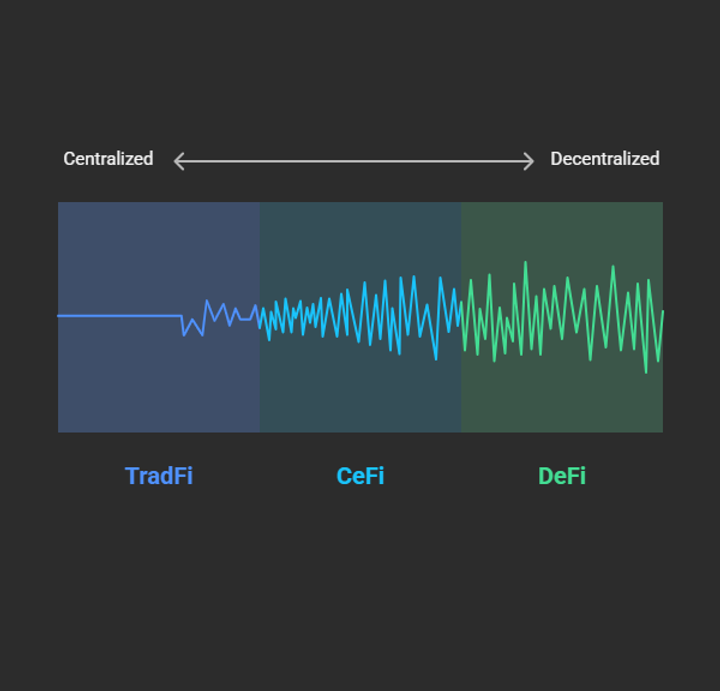
Scan incoming and outgoing transactions against current OFAC SDN lists and global sanctions databases. Flag any address with a direct connection to a prohibited entity.
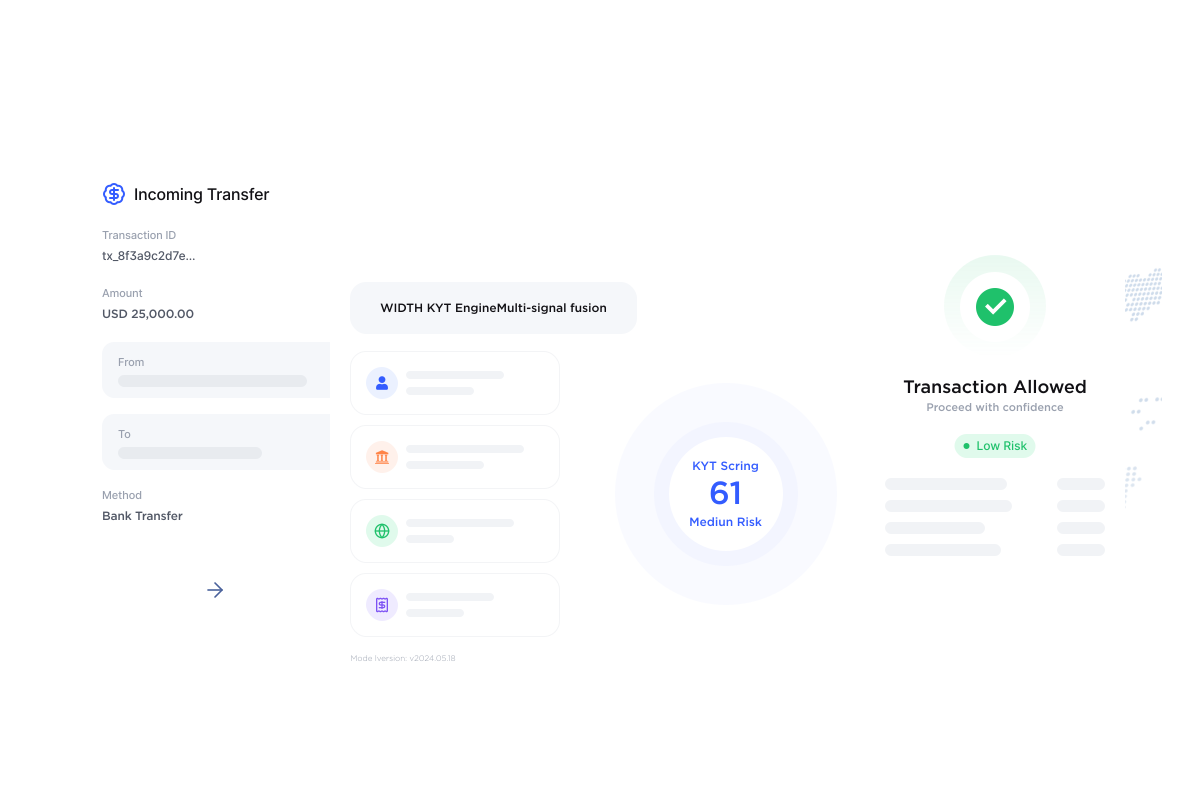
Expand the search to second and third-degree connections. Detect layering patterns where funds are split across multiple wallets to obscure the source, a common tactic in money laundering.
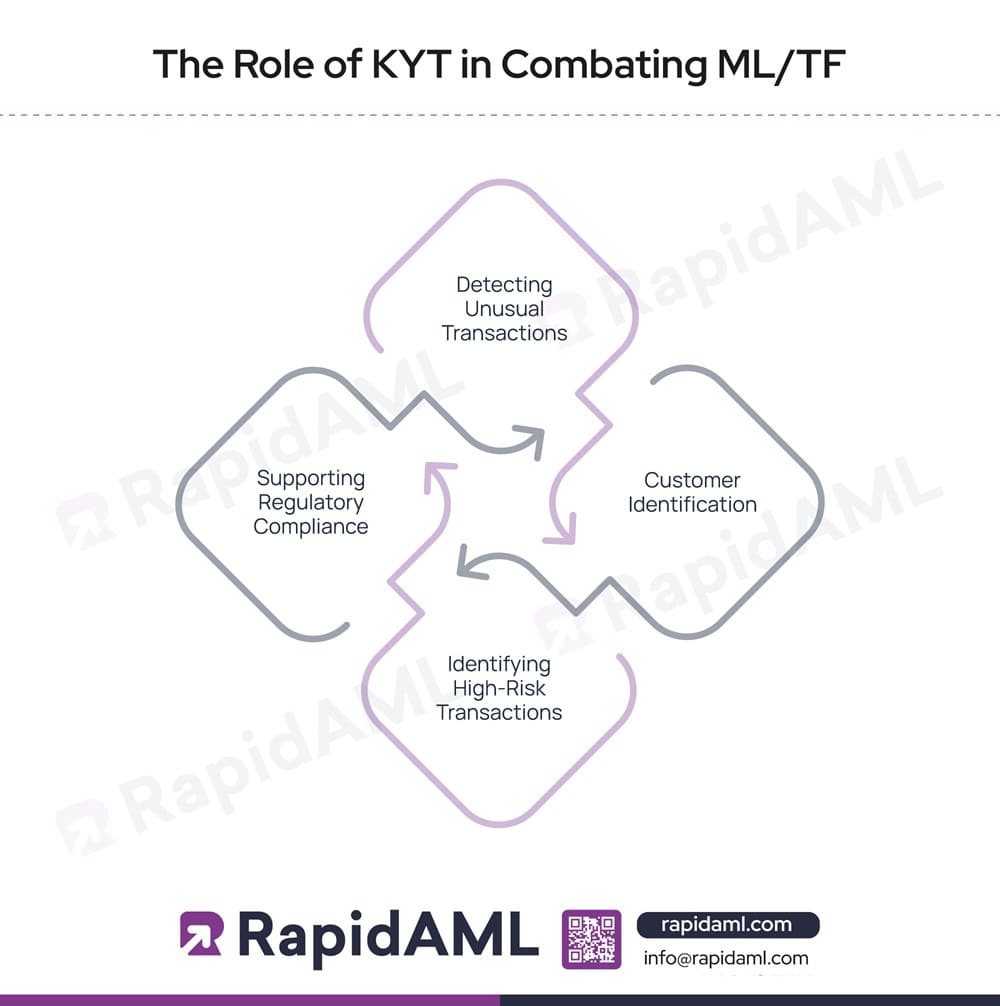
Assign risk scores based on the depth of the connection and the nature of the intermediate services. High-risk indicators include interactions with known tumblers or unhosted wallets linked to sanctioned regions.
This approach ensures that compliance is not just about checking a single address, but understanding the entire network. By visualizing these connections, platforms can enforce stricter controls and report suspicious activity more accurately to regulators.
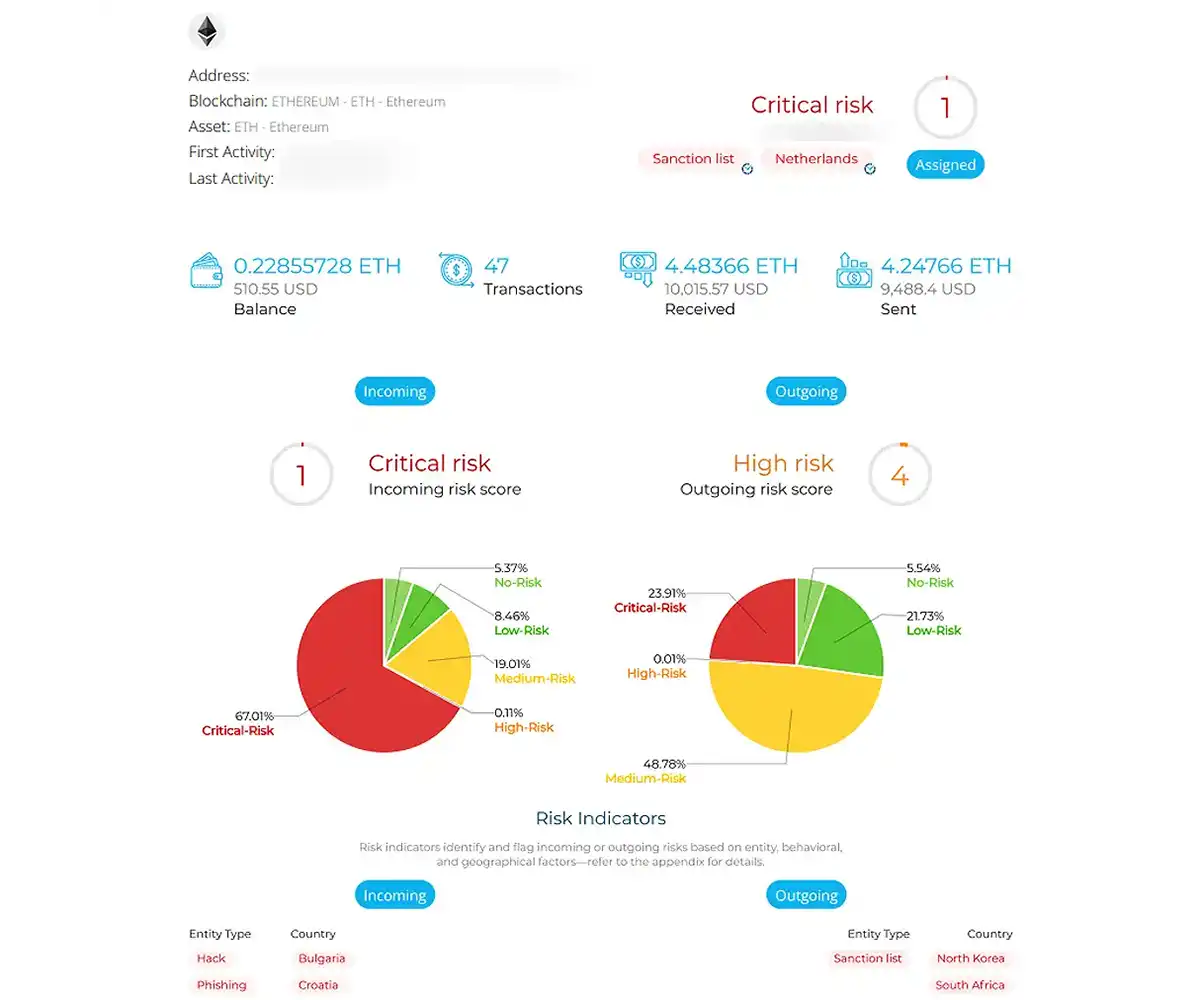
Compliance checklist for Web3 firms
Evaluating a KYT graph solution requires more than reviewing marketing claims. Compliance officers must verify that the underlying data infrastructure meets specific operational standards for risk management. This checklist focuses on three non-negotiable pillars: data freshness, jurisdictional scope, and API reliability.
Data freshness and latency
Real-time monitoring is ineffective if the graph lags behind the blockchain. Verify that the provider updates addresses within seconds of block confirmation. Look for explicit Service Level Agreements (SLAs) that define maximum latency thresholds. A delay of even a few minutes can allow high-value illicit transfers to move through multiple hops, complicating recovery efforts.
Jurisdictional coverage and sanctions
A graph solution is only as good as its coverage. Ensure the provider explicitly lists the jurisdictions and blockchain networks it supports. Check if the sanctions screening includes OFAC, EU, UK, and UN lists, and whether these lists are updated daily. Vague claims about "global coverage" are insufficient for compliance audits. You need documented evidence of specific regulatory alignment.
API reliability and uptime
Your compliance workflows depend on consistent data access. Test the provider’s API for uptime stability and response times during peak network congestion. High availability is critical; downtime during a security incident can result in significant financial loss. Request historical uptime reports and verify that the API supports bulk querying for historical analysis without performance degradation.
Selection criteria summary
| Criteria | Minimum Requirement | Verification Method |
|---|---|---|
| Latency | < 5 seconds per block | SLA review / Live demo |
| Sanctions | OFAC, EU, UK, UN | Documentation audit |
| Uptime | 99.9% availability | Historical uptime report |
| Support | 24/7 incident response | Vendor contract review |
Common kyt compliance: what to check next
Regulators and compliance teams frequently ask how Know Your Transaction (KYT) integrates with existing Anti-Money Laundering (AML) frameworks. Below are answers to the most common queries regarding implementation and scope.
No comments yet. Be the first to share your thoughts!