
What KYT Graph Analytics Do
Know Your Transaction (KYT) is the process of monitoring, analyzing, and evaluating cryptocurrency transactions to detect suspicious activity and ensure compliance with anti-money laundering (AML) and sanctions regulations. Unlike KYC, which focuses on user identity, KYT scrutinizes the transaction itself in real time.
Graph analytics serve as the engine behind this detection. By mapping the connections between wallet addresses, these tools visualize transaction flows as a network. This structure allows compliance teams to trace the origin of funds and identify links to illicit activity, such as mixing services or sanctioned entities, even when addresses change frequently.
In 2026, regulatory requirements demand more than simple address matching. Graph tools assess the risk of incoming and outgoing transactions by analyzing the broader context of the blockchain ledger. This approach helps platforms identify exposure to high-risk clusters before assets are settled, providing a layer of defense that static lists cannot offer.
Top KYT graph platforms for 2026
Selecting the right KYT graph platform requires balancing real-time transaction monitoring speed with the depth of your sanctions database coverage. As regulatory pressure mounts in 2026, exchanges and custodians are moving beyond basic screening toward comprehensive blockchain intelligence that tracks fund flows across complex mixer services and cross-chain bridges.
The market leaders have differentiated themselves through API integration capabilities and the accuracy of their risk scoring models. Below is a comparison of the primary tools shaping the compliance landscape this year.
Chainalysis remains the industry standard for many large exchanges due to its extensive historical data and user-friendly interface. Their KYT product assesses the risk of incoming and outgoing transactions by linking addresses to known illicit entities, providing a clear risk score for every deposit and withdrawal. For more details on their specific monitoring features, visit their official product page.
TRM Labs offers a powerful alternative for institutions requiring deep graph analysis. Their platform excels in tracing funds through complex obfuscation techniques, making it a strong choice for entities dealing with high-risk jurisdictions or sophisticated money laundering patterns. The company emphasizes its ability to provide actionable intelligence rather than just raw data.
Elliptic rounds out the top tier with a focus on global regulatory standards. Their solution is particularly strong in fiat on-ramp/off-ramp integration, helping platforms monitor the flow of funds between traditional banking systems and cryptocurrency networks. This dual-layer visibility is critical for maintaining compliance with both AML and CTF regulations.

When evaluating these platforms, consider the volume of transactions your business processes. High-throughput exchanges may prioritize Elliptic or Chainalysis for their scalability, while niche DeFi protocols might lean toward TRM Labs for its granular smart contract analysis. Always request a live demo to test the API response times against your specific transaction patterns.
How graph analytics detect risk
Graph analytics transforms raw blockchain data into a visual map of relationships. Instead of looking at individual transactions in isolation, KYT tools trace how funds move across multiple hops. This network view reveals the hidden connections between wallets, exchanges, and services that traditional ledger analysis might miss.
The core mechanism relies on identifying entities within the graph. When a wallet interacts with a known mixer, a sanctioned address, or a high-risk service, that interaction flags the entire cluster. The system assigns a risk score to the source wallet based on its proximity to these bad actors. A direct transfer from a sanctioned entity carries a high score, while a transaction that passed through three hops of a mixer might carry a slightly lower but still critical score.
Chainalysis KYT, for example, assesses the risk of incoming and outgoing transactions by evaluating these network paths. It doesn't just see a coin moving from A to B; it sees the history of A and the destination of B. This context allows compliance officers to see if a user is unknowingly receiving funds from a darknet marketplace or intentionally layering assets through a chain of tumblers.
This tracing capability is essential for detecting complex laundering schemes. Criminals often use "chain splitting" or "peeling chains" to break up large sums into smaller, untraceable amounts. Graph analytics can still identify the original source because the flow of value remains visible in the network topology, even when the individual addresses are anonymized.
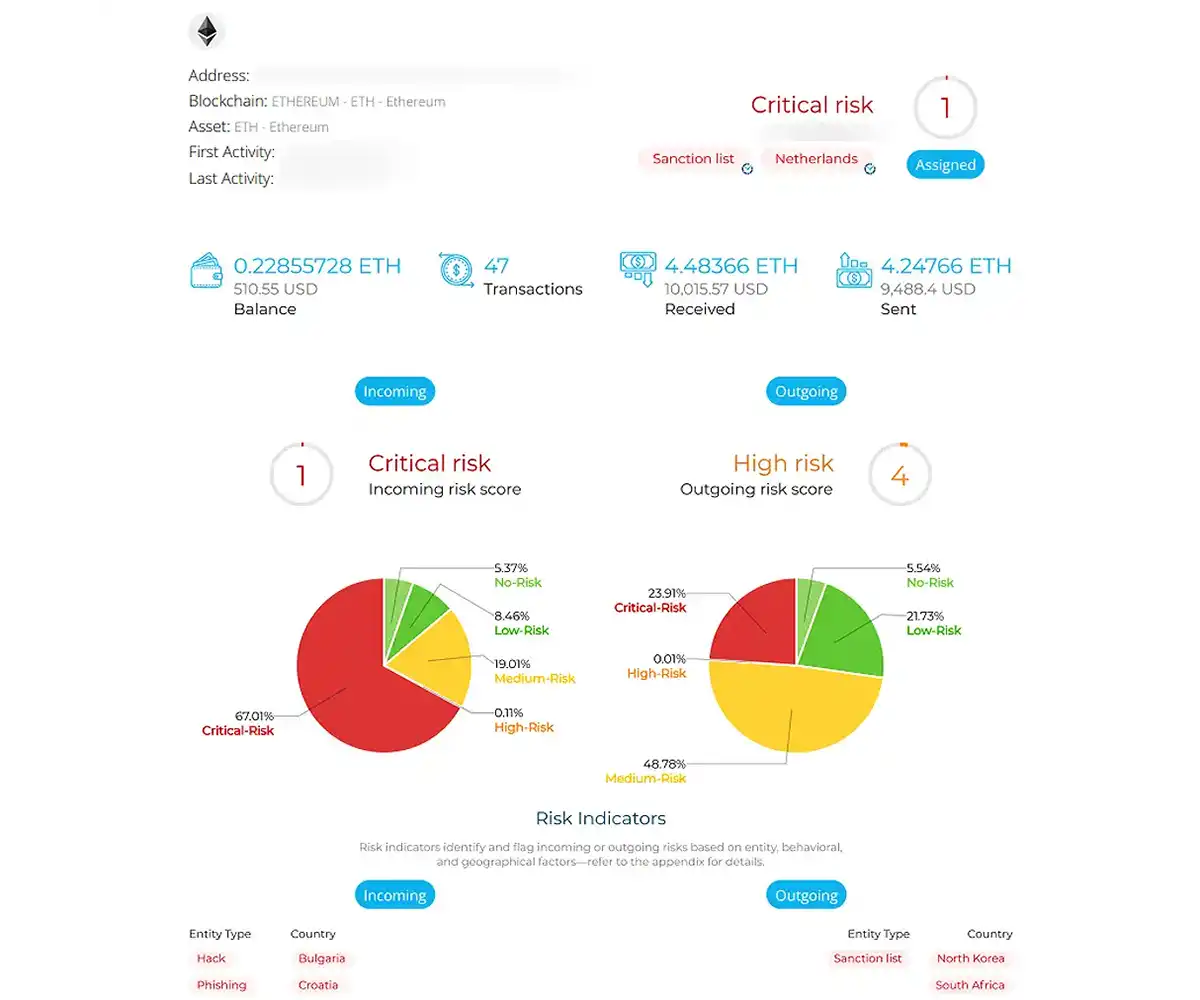
The result is a dynamic risk profile that updates in real-time. As new transactions occur and new entities are linked, the graph evolves. This continuous monitoring ensures that compliance teams are not just reacting to past events but are actively managing exposure to emerging threats in the crypto ecosystem.
Integrating KYT into Your Workflow
Setting up Know Your Transaction (KYT) graph tools requires more than just connecting an API; it demands a structured approach to risk management and operational efficiency. The goal is to embed transaction monitoring directly into your compliance pipeline without creating bottlenecks for legitimate users.
1. Configure API Endpoints and Webhooks
Begin by establishing secure API connections with your chosen KYT provider. Most platforms, such as Chainalysis, offer dedicated endpoints for real-time transaction risk assessment. Configure webhooks to receive instant notifications when a transaction triggers a risk flag. This ensures your compliance team can act immediately rather than waiting for batch reports.
2. Set Risk Thresholds and Alert Rules
Define clear risk thresholds that align with your platform’s risk appetite. You might set a low threshold for high-risk jurisdictions and a higher one for standard transactions. Use the KYT provider’s dashboard to create custom alert rules. For example, flag any transaction that touches a sanctioned entity or a known darknet marketplace, regardless of the amount.
3. Test with Historical and Live Data
Before going live, run a comprehensive test using historical transaction data. This helps you calibrate your alert rules and ensure they catch suspicious activity without generating excessive false positives. Once validated, enable live monitoring in a "shadow mode" where alerts are logged but do not block transactions. This allows your team to refine the workflow based on real-time performance.
4. Train Staff and Document Procedures
Your compliance team needs clear procedures for handling KYT alerts. Conduct training sessions to familiarize staff with the KYT graph interface and risk indicators. Document the escalation process for high-risk transactions, including who approves holds and how to report suspicious activity to regulators. Regular drills help maintain readiness and reduce response times during actual incidents.
5. Monitor and Adjust Over Time
KYT integration is not a one-time setup. Regularly review alert volumes and false positive rates to fine-tune your thresholds. As new threats emerge, update your risk rules and retrain your team. Continuous monitoring ensures your KYT workflow remains effective against evolving money laundering techniques.
Frequently asked: what to check next
What is the purpose of KYT?
Know Your Transaction (KYT) refers to the real-time monitoring of blockchain transactions to identify links to illicit activity or sanctioned addresses. It helps exchanges and wallet providers assess risk exposure and ensure compliance with anti-money laundering (AML) regulations before funds move.
How is KYT different from KYC?
KYC (Know Your Customer) verifies the identity of the person behind an account, while KYT tracks the movement of assets on the blockchain. KYC answers "who," and KYT answers "where the money went." Both are necessary for full regulatory compliance.
Do I need KYT if I just hold crypto?
No. KYT is a compliance tool for businesses, not individual holders. If you are running an exchange, custodian, or payment processor, KYT is mandatory to prevent your platform from being used for money laundering or sanctions evasion.
Helpful gear
Use these product recommendations as a starting point, then choose the size, material, and price point that fit how you actually use the gear.



As an Amazon Associate, we may earn from qualifying purchases.
No comments yet. Be the first to share your thoughts!