
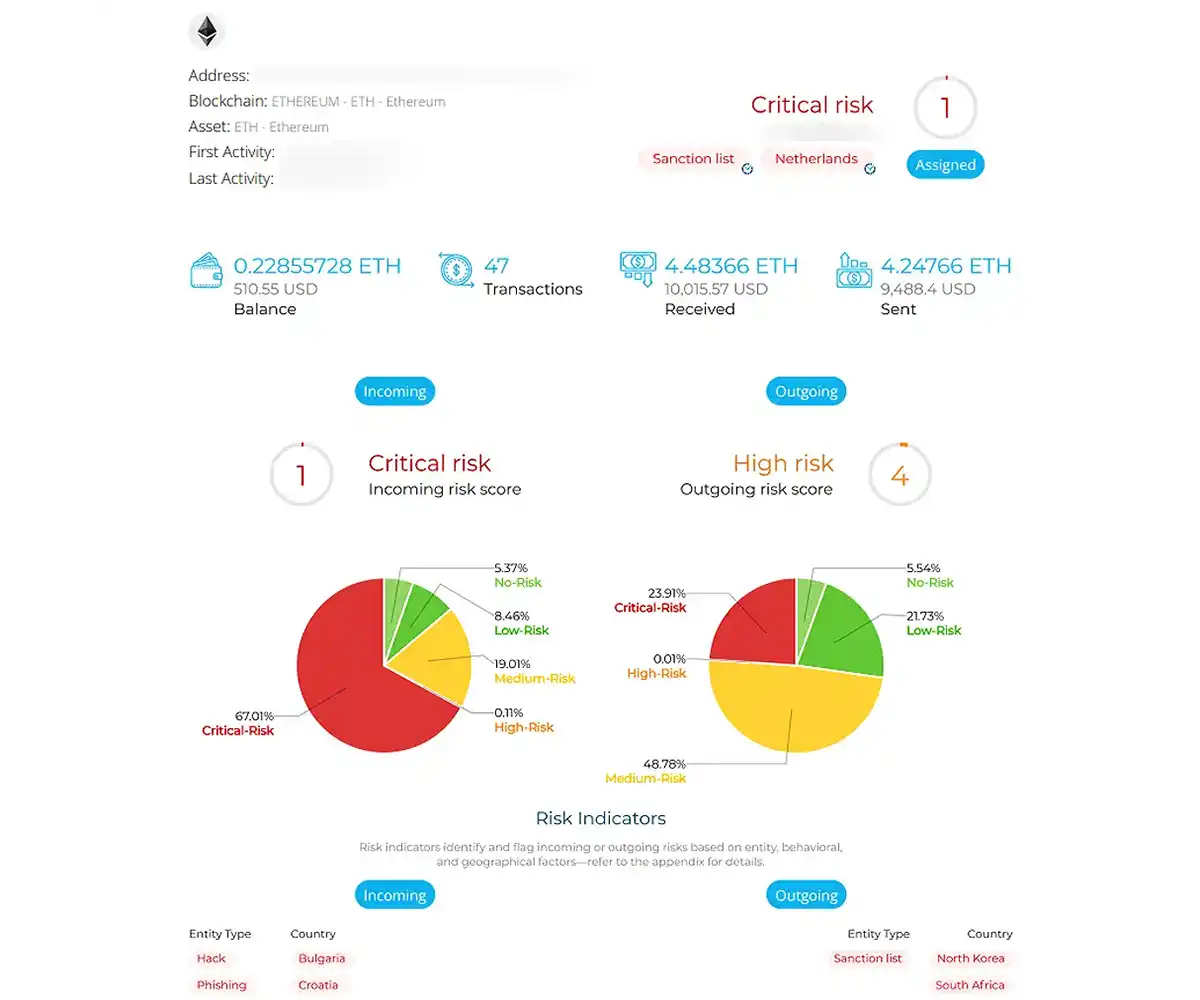
The Shift to Real-Time Compliance
The Web3 compliance landscape is undergoing a fundamental structural change. The era of batch-processing transactions and conducting retroactive audits is ending. Regulators and financial institutions now demand real-time visibility into transaction flows to mitigate sanctions risk before assets move. This shift is driven by the increasing sophistication of sanctions evasion techniques, which rely on the speed and anonymity of decentralized networks.
Traditional compliance tools struggle to keep pace. They often flag only direct interactions with known bad actors, missing the complex web of obfuscation used by sophisticated actors. These actors employ chain-hopping, mixers, and layering techniques to sever the link between illicit funds and their origin. Without graph analytics, compliance teams are blind to these indirect connections, leaving institutions exposed to regulatory penalties and reputational damage.
Know Your Transaction (KYT) graph analytics addresses this gap by mapping the entire transaction history of an address, not just its immediate counterparties. By visualizing the relationships between wallets, KYT systems can identify suspicious patterns, such as rapid movement through multiple intermediaries or clustering of funds from high-risk sources. This proactive approach allows institutions to block transactions in real-time, ensuring adherence to sanctions lists and anti-money laundering (AML) regulations.
The regulatory pressure is intensifying globally. Agencies like the Office of Foreign Assets Control (OFAC) have made it clear that virtual asset service providers are responsible for screening all transactions against sanctions lists. Failure to do so can result in severe fines and loss of banking relationships. Consequently, the industry is moving toward integrated KYT solutions that provide continuous, automated monitoring of blockchain activity.
This transition requires a robust technical infrastructure capable of processing millions of transactions per second. Institutions must integrate graph analytics into their core compliance workflows to achieve true real-time oversight. The cost of inaction is high, as the complexity of Web3 transactions continues to grow, making manual oversight impossible.
Tracing fund flows across wallets
Real-time compliance relies on graph analytics to map the movement of digital assets across decentralized networks. Instead of treating each transaction as an isolated event, these systems model wallets as nodes and transfers as edges, creating a visual representation of financial relationships. This structure allows compliance teams to see beyond the immediate counterparty and identify the underlying entities controlling a cluster of addresses.
The necessity for this depth of analysis becomes apparent when examining sanctions evasion. Actors often use obfuscation techniques like mixers or rapid layering through multiple wallets to hide the origin of illicit funds. Without graph traversal, a transaction might appear clean on the surface. However, by tracing the path back through the network, compliance engines can flag connections to known sanctioned entities, such as those listed by OFAC, even if the funds have passed through several intermediate hops.
To visualize this risk propagation, consider a scenario where a sanctioned wallet interacts with a compliant exchange. A graph-based KYT tool instantly maps the exposure, highlighting the specific transaction hash and the associated risk score. This immediate visibility is critical for preventing regulatory breaches and maintaining the integrity of financial platforms.
Crypto AML solutions for 2026
The landscape of crypto anti-money laundering (AML) has shifted from reactive flagging to proactive graph analytics. As of 2026, leading providers distinguish themselves not just by data coverage, but by their ability to trace illicit flows through complex mixers and privacy protocols in real time. The primary challenge for compliance teams is reducing false positives while maintaining the sensitivity required to detect sanctions evasion tactics.
Modern KYT platforms leverage knowledge graphs to map entity relationships across multiple blockchains. This allows investigators to identify hidden connections between seemingly unrelated addresses. For instance, when tracing funds from sanctioned entities like Tornado Cash or newer decentralized mixers, graph-based solutions can cluster addresses based on transaction patterns rather than just static wallet balances. This depth of analysis is critical for meeting evolving regulatory standards from the FinCEN and OFAC.
Below is a comparison of key features among leading KYT graph providers. These metrics reflect current capabilities regarding data latency, API integration flexibility, and coverage of high-risk chains.
| Provider | Avg. Latency | API Integration | Chain Coverage |
|---|---|---|---|
| Chainalysis | < 1 second | REST & GraphQL | 30+ chains |
| Elliptic | < 2 seconds | REST API | 25+ chains |
| TRM Labs | < 1 second | REST & SDK | 40+ chains |
| CipherTrace | < 3 seconds | REST API | 20+ chains |
Blockchain analytics trends and risks
The 2026 compliance landscape is defined by the acceleration of cross-chain interactions and the sophistication of sanctions evasion. As decentralized finance (DeFi) protocols increasingly rely on interoperability, the attack surface for illicit actors has expanded. Graph analytics providers are now prioritizing real-time visibility across heterogeneous ledgers to detect suspicious flows that traditional, siloed blockchain explorers miss.
Cross-chain bridging risks
Cross-chain bridges remain the primary vector for laundering illicit funds due to their inherent trust assumptions and liquidity fragmentation. Bad actors exploit these bridges to move assets from regulated, monitored chains to less scrutinized networks, effectively blurring the audit trail. Compliance teams must now trace transaction paths not just within a single chain, but across multiple ecosystems simultaneously. Failure to monitor bridge liquidity pools and smart contract interactions leaves organizations vulnerable to holding or processing tainted assets.
Evolution of sanctions evasion tactics
Sanctions evasion has shifted from simple address obfuscation to complex, multi-hop obfuscation techniques. Actors now utilize mixers, privacy-preserving protocols, and decentralized exchanges (DEXs) in rapid succession to break the link between the source of funds and the final destination. Recent enforcement actions highlight how illicit entities leverage non-custodial wallets and decentralized identity protocols to bypass traditional Know Your Customer (KYC) checks. Graph analytics is critical here, as it can identify patterns of behavior—such as circular transactions or coordinated wallet clusters—that indicate intentional evasion rather than legitimate privacy usage.
Regulatory pressure and graph analytics
Regulatory bodies are increasingly mandating that Virtual Asset Service Providers (VASPs) implement robust transaction monitoring systems. The Financial Action Task Force (FATF) has emphasized the need for VASPs to monitor transactions involving high-risk jurisdictions and entities. This regulatory push has accelerated the adoption of graph-based analytics, which can visualize complex relationships and flag anomalies in real-time. Organizations that fail to adopt these advanced monitoring tools risk severe penalties, including loss of banking relationships and operational licenses.
No comments yet. Be the first to share your thoughts!