
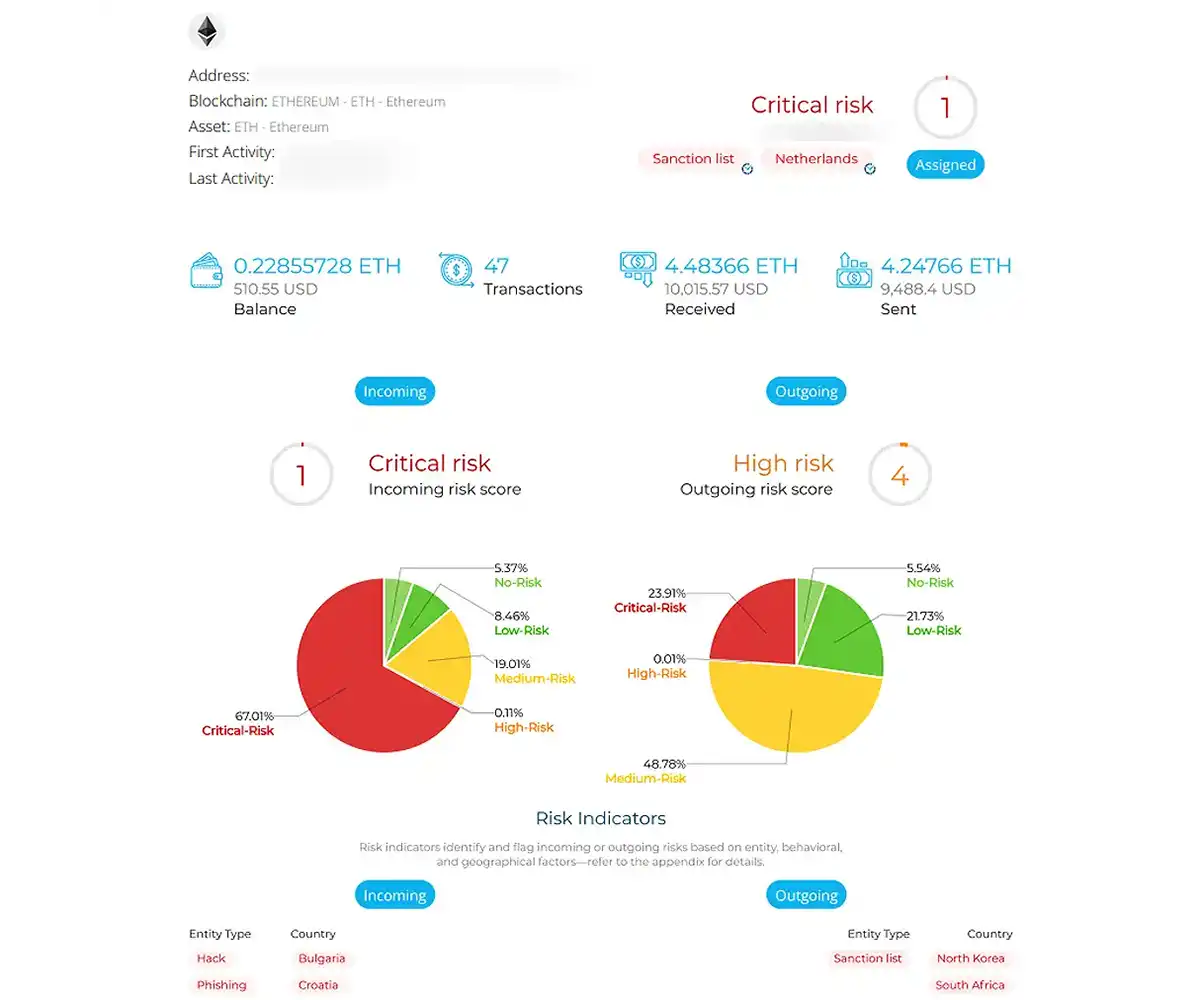
What Is a KYT Graph?
A KYT (Know Your Transaction) graph maps the flow of cryptocurrency transactions in real time, turning raw blockchain data into a visual network of connections. Instead of looking at isolated addresses, compliance teams see the entire path funds take from origin to destination. This structure is the backbone of modern Anti-Money Laundering (AML) strategies, allowing institutions to detect suspicious patterns before they escalate.
The primary value lies in speed and context. Traditional monitoring often flags addresses after a transaction settles, leaving a narrow window for response. A KYT graph solution, such as the one offered by Chainalysis, monitors activity and generates alerts within seconds. This rapid detection enables proactive blocking or enhanced due diligence, significantly reducing the risk of processing illicit funds.
For regulated entities, the graph also simplifies the "travel rule" compliance burden. By visualizing counterparty relationships, firms can quickly assess the risk score of every interaction. It transforms blockchain analysis from a forensic afterthought into a proactive gatekeeper, ensuring that every transaction aligns with current regulatory expectations.
Kyt graph choices that change the plan
Choosing a KYT (Know Your Transaction) monitoring solution requires balancing speed, accuracy, and cost. You are not just buying software; you are selecting a risk tolerance level. The "graph" aspect refers to how deeply the system traces transaction histories across the blockchain. Deeper tracing improves compliance but increases computational overhead and latency.
The primary tradeoff lies between real-time alerting and comprehensive historical analysis. Systems that prioritize instant alerts may miss complex, multi-hop laundering patterns that only become visible after several blocks are confirmed. Conversely, tools that perform deep graph analysis might introduce delays that prevent you from blocking a transaction before it settles. For high-frequency trading environments, latency is the enemy. For regulatory audits, depth is the priority.
| Feature | Real-Time Focus | Graph Depth | Cost Profile |
|---|---|---|---|
| Instant Alerting | High | Shallow | Low |
| Deep Trace | Low | High | High |
| Balanced | Medium | Medium | Medium |
Another critical factor is false positive rates. A system with aggressive graph tracing will flag more transactions, requiring more manual review. This increases operational costs. A lighter system reduces workload but risks missing illicit activity. You must evaluate your team's capacity to handle alerts. If your compliance team is small, a high-precision, lower-volume system is often more effective than a high-volume one.
Finally, consider the integration complexity. Some KYT solutions require significant engineering resources to implement their graph APIs. Others offer plug-and-play dashboards. For startups, ease of use may outweigh deep customization. Established exchanges may prioritize the raw data access provided by more complex graph tools. Evaluate your engineering bandwidth before committing to a vendor.
How to Choose the Right KYT Monitoring Tool
Selecting a KYT (Know Your Transaction) solution requires balancing speed, accuracy, and regulatory alignment. The right platform acts as a real-time filter, flagging suspicious activity before funds leave your custody. With the 2026 compliance landscape shifting toward stricter enforcement, your choice of monitoring tool directly impacts your operational risk and user experience.
1. Evaluate Real-Time Detection Latency
The core value of KYT lies in its ability to detect suspicious activity almost immediately after an on-chain transaction occurs. Delayed detection allows bad actors to move funds through multiple layers of obfuscation. Look for platforms that offer sub-second latency and proactive blocking capabilities. Chainalysis KYT, for instance, monitors activity in real time, enabling immediate intervention. This speed is critical for high-volume exchanges and custodial services where every second counts.
2. Assess Risk Scoring Accuracy
Not all flagged transactions are equally dangerous. A robust KYT system uses sophisticated risk scoring models to distinguish between high-risk entities and false positives. The system should analyze the entire transaction history of the address, not just the current hop. This depth helps compliance teams prioritize investigations efficiently. Avoid tools that rely on static lists; instead, choose those that leverage dynamic graph analysis to understand the context of fund flows.
3. Check Regulatory Integration
Your KYT tool must integrate seamlessly with existing AML (Anti-Money Laundering) frameworks. It should support standard reporting formats and facilitate easy audit trails. Consider whether the platform offers APIs for custom integration with your internal compliance workflows. This ensures that your KYT data feeds directly into your broader risk management strategy, reducing manual effort and minimizing errors.
4. Consider Scalability and Cost
As your business grows, your monitoring needs will evolve. Ensure the KYT solution can scale with your transaction volume without prohibitive costs. Some providers charge per API call or per address monitored, while others offer flat-rate enterprise plans. Evaluate the total cost of ownership, including potential overage fees, to avoid budget surprises. For many startups, a pay-as-you-go model may be more appropriate initially.
5. Review Support and Documentation
Compliance is not a one-time setup; it requires ongoing maintenance and adaptation. Choose a vendor with comprehensive documentation and responsive support. They should provide regular updates on new threat vectors and regulatory changes. Strong customer support can be a lifeline when dealing with complex compliance queries or system issues during peak trading periods.
Spotting Weak KYT Options
The KYT (Know Your Transaction) market is crowded with solutions that look impressive in marketing decks but fall short in actual compliance audits. For 2026, the primary keyword cluster revolves around real-time transaction monitoring and AML compliance. Many vendors promise instant detection, but the devil is in the configuration. A tool that fails to flag high-risk wallet interactions in under five seconds is essentially a data repository, not a monitoring system.
When evaluating options, ignore the flashy dashboards and focus on the alert latency. Chainalysis KYT, for instance, generates alerts within seconds of an on-chain transaction, allowing for proactive blocking rather than reactive cleanup. This speed is critical for exchanges handling high-volume flows. If a vendor cannot provide specific benchmarks for their detection latency, treat it as a red flag.
Another common mistake is over-reliance on static risk scores. Blockchain activity is dynamic; a wallet labeled "low risk" today might be interacting with a sanctioned entity tomorrow. Effective KYT solutions must update risk profiles in real-time, not just during batch processing. Ensure the platform you choose integrates live threat intelligence feeds. Without this, your compliance team is working with yesterday's news, leaving your platform exposed to regulatory penalties.
Kyt graph: what to check next
When evaluating KYT Graph for 2026 compliance workflows, teams often hit practical roadblocks regarding data integration and regulatory alignment. These questions address the most common friction points before you commit to a vendor or build a custom solution.
These answers reflect the core capabilities that matter most for operational efficiency and regulatory safety. If your team needs deeper technical specifics, consult the official documentation for API details and integration guides.
No comments yet. Be the first to share your thoughts!