
Defining the KYT graph in compliance
Know Your Transaction (KYT) graph analytics represents a fundamental shift from static identity verification to dynamic behavioral monitoring. While traditional Know Your Customer (KYC) protocols establish a baseline of identity at onboarding, they do not inherently detect illicit activity occurring after the account is active. KYT fills this compliance gap by analyzing the flow of funds across a network, treating every transaction as a node within a larger graph structure.
The core utility of KYT lies in its ability to map relationships between entities. Instead of reviewing transactions in isolation, graph analytics visualizes the connections between wallets, exchanges, and individuals. This approach allows compliance teams to identify complex money laundering structures, such as layering techniques where funds are moved through multiple intermediaries to obscure their origin. By visualizing these pathways, regulators and financial institutions can spot suspicious patterns that rule-based systems often miss.
This method provides a real-time view of financial activity, enabling proactive rather than reactive risk management. As regulatory frameworks evolve to address the sophistication of digital asset crimes, the integration of graph analytics has become a standard requirement for robust anti-money laundering (AML) programs. The technology does not replace KYC but complements it, creating a continuous loop of verification and monitoring that adapts to the changing landscape of financial crime.
AI-driven pattern detection in 2026
Machine learning models have shifted from reactive rule-based systems to proactive, graph-based anomaly detection. In 2026, the primary defense against complex money laundering is not static threshold monitoring, but dynamic relationship mapping. Traditional systems flag individual transactions that exceed set limits, but sophisticated criminals use layering and smurfing to stay below those radar screens. Graph analytics connect these seemingly unrelated transactions, revealing the hidden structure of illicit networks.
Modern AI models analyze the topology of transaction graphs in real-time. They identify subtle patterns indicative of smurfing—where large sums are broken into smaller, untraceable deposits across multiple accounts—or layering, where funds are moved through numerous intermediaries to obscure their origin. These models learn from historical laundering typologies, adjusting their sensitivity to new evasion tactics as they emerge. This reduces false positives by focusing on behavioral context rather than isolated transaction values.
The integration of natural language processing (NLP) further enhances detection. AI now scans unstructured data, such as transaction memos and customer profiles, for inconsistencies that correlate with known laundering schemes. By combining graph topology with semantic analysis, compliance teams can prioritize alerts that represent genuine high-risk activity. This precision allows financial institutions to meet evolving regulatory expectations without overwhelming their investigation teams with noise.
Real-time monitoring vs batch processing
The operational shift from retrospective batch analysis to immediate transaction blocking represents the fundamental advantage of KYT graph analytics. Legacy batch processing systems operate on a delay, typically reviewing transactions after they have settled or at fixed intervals. This lag creates a window where illicit funds can move through multiple layers of obfuscation, making recovery nearly impossible and compliance reporting reactive rather than proactive.
Real-time KYT graph monitoring integrates directly into the transaction flow. By analyzing network relationships and entity clusters at the moment of initiation, financial institutions can flag or block high-risk activity before settlement. This immediate intervention aligns with the expectations of modern regulators, who increasingly view delayed detection as a control failure rather than a standard operational procedure.
The following comparison highlights the operational differences between these two approaches across critical compliance metrics.
| Metric | Legacy Batch Processing | Real-Time KYT Graph |
|---|---|---|
| Latency | Hours to days | Milliseconds to seconds |
| False Positive Rate | High (broad rules) | Lower (context-aware) |
| Regulatory Response | Reactive reporting | Proactive intervention |
| Transaction Blocking | Impossible post-settlement | Pre-settlement blocking |
| Network Visibility | Isolated transaction view | Full entity cluster view |
Sanctions Screening Integration
The primary advantage of graph-based KYT systems is the ability to execute sanctions screening in real-time, rather than relying on asynchronous batch processing. Traditional systems often check transactions against lists like OFAC or EU sanctions after the fact, allowing illicit funds to move through the network before detection. Graph analytics invert this model by evaluating the entire transaction path against these lists at the moment of initiation.
This integration requires the system to maintain a synchronized, high-fidelity index of sanctioned entities. When a transaction is proposed, the graph engine does not merely check the sender and receiver. It performs a multi-hop search to identify if any intermediate node in the transaction chain—such as a mixer, a bridge, or a temporary holding wallet—is linked to a sanctioned address. This capability is critical for identifying indirect exposure, where a criminal actor uses multiple hops to distance themselves from a blacklisted entity.
Regulatory compliance demands precision. The system must differentiate between direct matches and fuzzy associations. By leveraging the structural context of the graph, KYT tools can assess the likelihood of illicit intent based on the topology of the connections. For instance, a wallet that frequently interacts with known sanctioned addresses may be flagged for enhanced due diligence, even if it is not on the list itself. This nuanced approach reduces false positives while ensuring that no sanctioned entity or its direct proxies can utilize the platform. The result is a robust barrier that stops illicit flows before they settle, aligning technical infrastructure with strict regulatory requirements.
Choosing a KYT Graph Provider
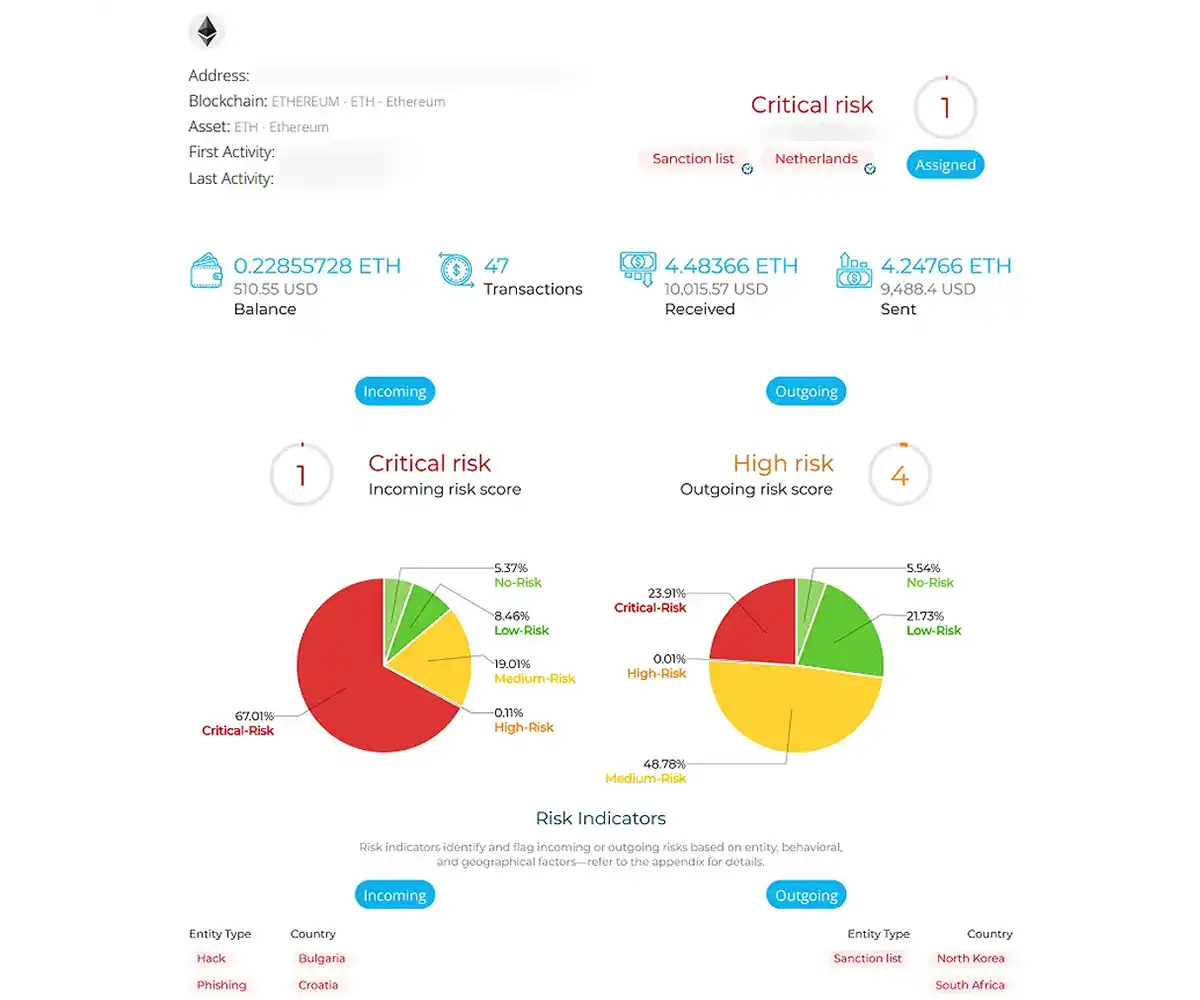
Selecting a Know Your Transaction (KYT) graph provider requires evaluating three technical pillars: data coverage, API latency, and regulatory alignment. The graph database must map the entire transaction history of an address, not just the current balance, to identify layered laundering attempts effectively.
Data Coverage and Graph Depth
A robust KYT solution must index transactions across all major blockchains and stablecoins. Look for providers that maintain a full history of inbound and outbound flows, including interactions with mixers and privacy protocols. The graph should allow you to trace funds back to their origin, not just forward to their destination.
API Speed and Real-Time Updates
AML monitoring is only effective if it is real-time. Evaluate the provider’s API latency during peak network congestion. The system must flag high-risk transactions before they are confirmed or settled. Test the provider’s ability to handle concurrent requests without degrading response times, as this directly impacts your customer onboarding experience.
Regulatory Alignment and Audit Trails
Your chosen vendor must align with current FinCEN guidance and FATF Travel Rule standards. Ensure the provider offers detailed audit trails that explain how risk scores are calculated. This transparency is critical when defending your compliance decisions to regulators. Avoid providers that use "black box" scoring algorithms without clear documentation of their risk parameters.
No comments yet. Be the first to share your thoughts!