
Defining the KYT Graph
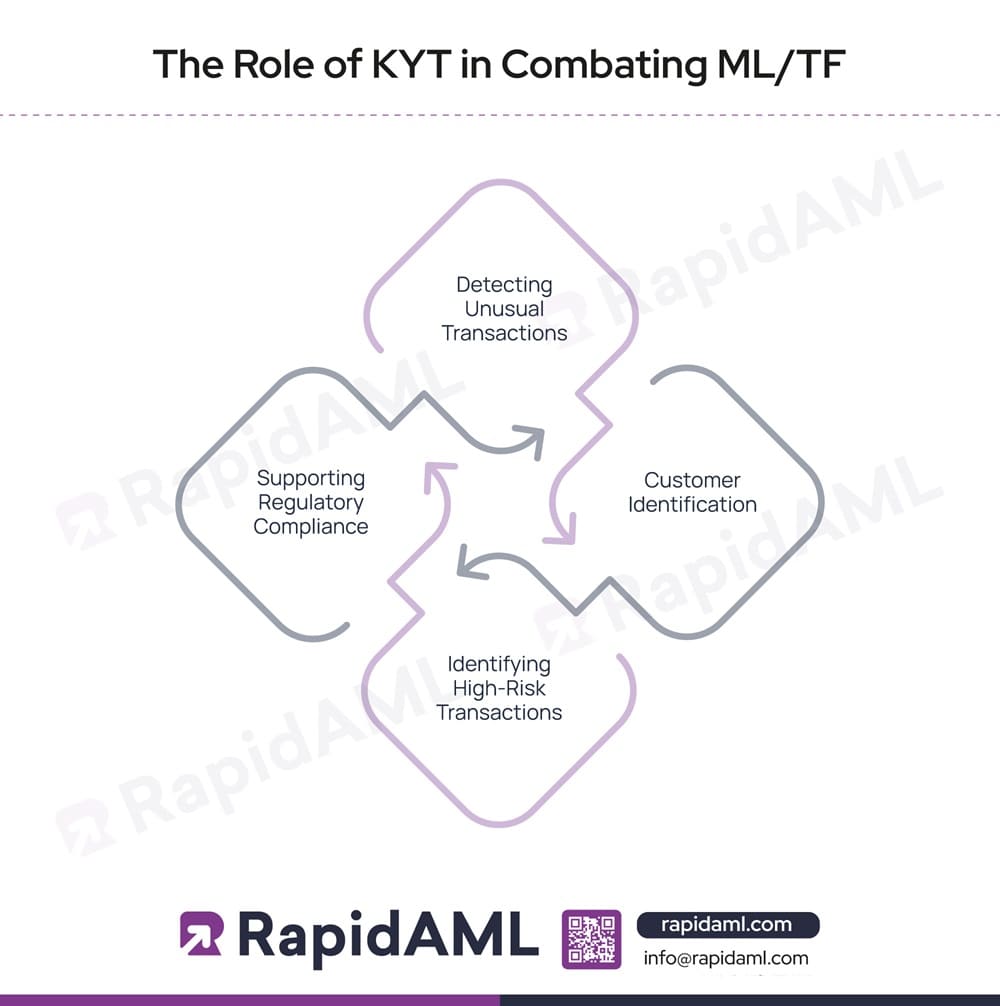
In the architecture of decentralized finance, regulatory compliance relies on a fundamental distinction between Know Your Customer (KYC) and Know Your Transaction (KYT). While KYC establishes the identity of an account holder through traditional documentation, KYT utilizes graph analytics to trace the movement of assets across the blockchain. This shift from static identity verification to dynamic transaction monitoring is the technical foundation for modern anti-money laundering (AML) frameworks.
A KYT graph maps the relationships between blockchain addresses, treating each wallet as a node and every transfer as an edge. This structure allows compliance officers to visualize the flow of funds in real time, identifying complex patterns that traditional rule-based systems miss. By analyzing the topology of these connections, institutions can determine the risk profile of a transaction based on its proximity to known illicit entities, rather than relying solely on the identity of the sender.
This methodology aligns with the FATF Travel Rule, which mandates that virtual asset service providers (VASPs) share originator and beneficiary information for transactions above specific thresholds. The FATF guidelines emphasize the need for effective monitoring of transaction networks to prevent the misuse of digital assets. A KYT graph provides the necessary infrastructure to meet these obligations by offering a transparent, auditable record of asset provenance and destination.
Unlike traditional banking systems, where transaction data is siloed within individual institutions, blockchain data is public but pseudonymous. KYT analytics bridge this gap by clustering addresses and assigning risk scores to entities within the graph. This enables financial institutions to comply with Office of Foreign Assets Control (OFAC) sanctions lists not just by checking names, but by identifying addresses linked to sanctioned jurisdictions or entities through their transactional history.
Tracking illicit flows with graph theory
Traditional linear monitoring tools often fail to detect sophisticated money laundering because they view transactions in isolation. Each transfer appears as a standalone event, making it difficult to spot the complex routing schemes used by bad actors. Graph analytics changes this perspective by treating the blockchain as a network of relationships. By mapping addresses as nodes and transactions as edges, compliance teams can visualize the entire flow of funds across multiple hops and wallets.
This network view reveals patterns that linear systems miss. Money launderers frequently use "chain-hopping" or layering techniques, moving assets through dozens of intermediate addresses to obscure the origin. In a graph, these chains appear as dense clusters or specific structural signatures. Regulatory bodies emphasize the importance of understanding these underlying transaction relationships to effectively identify suspicious activity. Graph algorithms can instantly flag these clusters, even if individual transactions seem benign.
Visualizing these connections allows investigators to trace funds from high-risk sources to final destinations. Instead of checking a single address against a blacklist, the system assesses the risk of the entire connected component. This approach is critical for meeting anti-money laundering (AML) requirements, as it provides a comprehensive view of exposure. By identifying the structure of the network, institutions can better assess the true risk profile of their users and report suspicious activities with greater accuracy.
DeFi protocols facing regulatory scrutiny
Decentralized exchanges (DEXs) and lending platforms are moving from a period of regulatory ambiguity to one of enforced compliance. As 2026 approaches, the primary pressure point is no longer just legal risk, but operational viability. Protocols that rely on permissionless liquidity pools without robust Know Your Transaction (KYT) graph analytics face increasing difficulty in maintaining banking relationships and avoiding sanctions violations.
The FATF Travel Rule guidelines have set a global standard that requires virtual asset service providers (VASPs) to transmit originator and beneficiary information alongside transactions. While DeFi protocols often argue they are non-custodial code, regulators are increasingly viewing the entities deploying or governing these smart contracts as VASPs. This shift means that anonymity, once a core feature of DeFi, is now a compliance liability.
To meet these 2026 standards, protocols must integrate graph-based KYT solutions that can trace fund flows across complex, multi-hop transactions. Without this visibility, protocols cannot effectively screen for interactions with sanctioned addresses or mixers, exposing themselves to severe penalties under Office of Foreign Assets Control (OFAC) regulations.
The divergence between traditional finance (TradFi) and DeFi compliance requirements is stark. The table below outlines the fundamental differences in how centralized entities and decentralized protocols are expected to handle regulatory data.
| Feature | Centralized Exchange (CEX) | DeFi Protocol | KYT Graph Requirement |
|---|---|---|---|
| User Onboarding | KYC/Identity Verification | Anonymous Wallet Connection | Screen wallet history before interaction |
| Transaction Monitoring | Real-time internal ledger checks | On-chain graph analysis | Trace multi-hop fund flows |
| Sanctions Screening | List-based blocking at entry | Continuous graph traversal | Identify indirect exposure to OFAC lists |
| Travel Rule Compliance | Direct data transfer to counterparty VASP | Smart contract data fields or off-chain proof | Attach originator data to transaction metadata |
| Audit Trail | Centralized database logs | Immutable blockchain records | Map transaction graphs for forensic review |
Cross-border payment compliance challenges
International transfers introduce a layer of complexity that domestic transactions do not face. When funds cross jurisdictions, they must satisfy the regulatory requirements of multiple sovereign nations simultaneously. This creates a fragmented compliance landscape where a transaction legal in one country may violate sanctions in another. Without a unified view of the transaction path, financial institutions risk inadvertently facilitating prohibited flows.
The FATF Travel Rule requires virtual asset service providers to share originator and beneficiary information for transfers exceeding specific thresholds. However, many jurisdictions lack standardized implementation, creating gaps where illicit funds can hide. Graph analytics mitigate this by visualizing the entire chain of custody, not just the immediate sender and receiver. This allows compliance teams to trace funds through multiple hops and identify hidden connections to sanctioned entities.
OFAC sanctions lists are dynamic and expansive, covering individuals, entities, and jurisdictions. A single cross-border payment might touch addresses linked to sanctioned regions like Iran or North Korea, even if the primary parties are legitimate. KYT graphs detect these indirect exposures by analyzing the broader network topology. Instead of relying on static blacklists, institutions use real-time graph traversal to flag transactions that exhibit patterns associated with money laundering or sanctions evasion.
The integration of graph analytics into compliance workflows transforms cross-border payments from a compliance burden into a verifiable asset. By providing a clear, auditable record of fund movement, institutions can demonstrate due diligence to regulators. This proactive approach reduces the risk of violations and builds trust with international partners who require rigorous AML standards.
Implementing real-time KYT monitoring
Integrating Know Your Transaction (KYT) graph analytics into existing compliance workflows requires a shift from periodic batch processing to continuous, event-driven monitoring. This approach aligns with FATF guidance on virtual assets, which emphasizes the need for timely detection of suspicious activity to prevent money laundering and terrorist financing (ML/TF).
To operationalize this effectively, compliance teams should follow a structured integration path:
Begin by mapping incoming and outgoing transactions to known on-chain entities. Use graph analytics to visualize the flow of funds between wallets, exchanges, and smart contracts. This step establishes the baseline for identifying direct and indirect exposure to sanctioned addresses or high-risk services.

Configure risk scoring models based on regulatory frameworks such as OFAC sanctions lists and FATF travel rule requirements. Assign weights to different risk factors, including transaction volume, counterparty reputation, and geographic location. Set thresholds that trigger immediate alerts for high-risk activities while minimizing false positives for routine transactions.
Connect your KYT monitoring tool to your existing case management or ticketing system. This ensures that alerts are automatically routed to the appropriate compliance officers for investigation. Seamless integration reduces response times and ensures that all flagged transactions are documented and reviewed according to internal policies.
By adopting these steps, organizations can achieve immediate risk assessment capabilities, ensuring that their DeFi operations remain compliant with evolving global standards.
Common kyt graph: what to check next
How does KYT graph analytics support AML compliance?
KYT (Know Your Transaction) graph analytics maps transaction flows to identify suspicious patterns. This technology helps financial institutions comply with Anti-Money Laundering (AML) regulations by detecting complex layering and integration schemes that linear tracking misses. It provides the audit trails required by regulatory bodies.
Is KYT graph analytics required by FATF recommendations?
The FATF recommends the use of advanced monitoring tools to combat financial crime. While not explicitly mandating "graph" technology, FATF Recommendation 16 requires institutions to verify originator and beneficiary information. Graph analytics is the most effective method for fulfilling these traceability obligations in decentralized finance.
Can KYT graphs detect mixers and tumblers?
Yes. Graph analytics can trace funds through mixing services by analyzing the topology of the blockchain. Even if direct ownership is obscured, the structural patterns of fund movement often reveal connections to known mixer addresses, allowing compliance teams to flag high-risk interactions for further review.
No comments yet. Be the first to share your thoughts!