
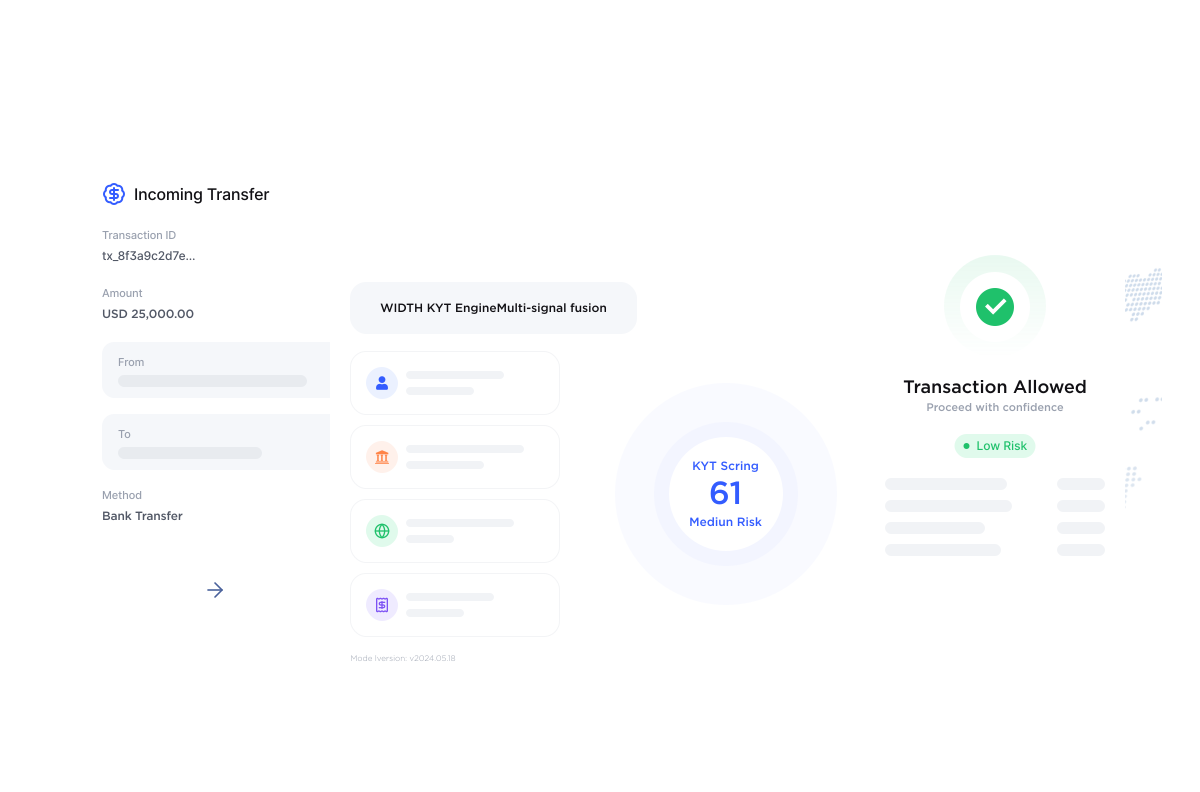
The shift from static labels to real-time graph analysis
The landscape of blockchain monitoring has shifted. Static address labeling—where an address is tagged with a single label like "Exchange" or "Hacker"—is no longer sufficient for high-stakes financial operations. In 2026, the focus is on dynamic, real-time graph analysis. This approach treats the blockchain not as a ledger of individual entries, but as a living network of relationships that evolves with every transaction.
This evolution is driven by the integration of AI into graph databases. Traditional systems rely on historical data, creating a lag between a suspicious activity and its detection. AI-driven KYT graphs analyze transaction patterns, entity clustering, and risk scores in real time. They identify complex obfuscation techniques, such as chain-hopping or mixer usage, before funds are fully settled. The goal is not just to label where money has been, but to predict where it is going.
The underlying infrastructure supporting this shift is becoming more robust. Projects like The Graph are moving toward multi-service blockchain data infrastructure, enabling developers to query complex relational data across multiple chains with low latency. This technical foundation allows for the high-frequency data ingestion required by AI models. Without real-time data availability, predictive fraud detection remains theoretical. With it, compliance teams can react to threats as they happen, rather than investigating them after the fact.
To understand the market context of these monitoring tools, it helps to look at the assets they often track. The volatility and flow of major cryptocurrencies drive the demand for these advanced KYT solutions.
Real-time transaction monitoring mechanics
Graph-based KYT systems process transaction data as it enters the network, rather than waiting for batch processing cycles. By mapping relationships between wallet addresses in real time, these tools identify suspicious patterns instantly. This immediacy is critical for high-stakes environments where delays allow fraudsters to move funds before traditional alerts can trigger.
The core advantage lies in latency reduction. Traditional rule-based systems often flag transactions after they have settled, leaving little room for intervention. Graph monitoring analyzes the context of a transfer—looking at the sender’s history, the recipient’s connections, and the flow of assets—within milliseconds. This allows financial institutions to block or flag high-risk transactions before they finalize, significantly reducing exposure to illicit activity.
Immediate risk flagging relies on dynamic scoring. Instead of static blacklists, graph algorithms assign risk scores based on the density and nature of connected nodes. A wallet linked to multiple sanctioned entities or mixing services receives a higher score instantly. This dynamic approach adapts to evolving threats, ensuring that monitoring remains effective against new fraud vectors without constant manual rule updates.
AI fraud detection in crypto markets
Use this section to make the KYT Graph decision easier to compare in real life, not just on paper. Start with the reader's actual constraint, then separate must-have requirements from details that are merely nice to have. A practical choice should survive normal use, maintenance, timing, and budget. If a recommendation only works in an ideal situation, call that out plainly and give the reader a fallback path.
The simplest way to use this section is to write down the must-have criteria first, then compare each option against those criteria before weighing nice-to-have features.
Comparing KYT analytics platforms
Selecting the right Know Your Transaction (KYT) provider requires matching specific technical capabilities to your compliance risk profile. The market has shifted from static rule-based screening to dynamic graph analytics that map fund flows in real time. This section compares leading providers across three critical dimensions: data coverage, AI detection accuracy, and regulatory support.
The following comparison table highlights the core differentiators among top-tier KYT graph analytics solutions. While all listed platforms offer blockchain monitoring, their approaches to subgraph resolution and machine learning integration vary significantly.
| Provider | Real-Time Speed | AI Detection | Regulatory Support |
|---|---|---|---|
| Chainalysis | <5s latency | High (ML-driven) | FATF, OFAC, EU AML |
| Elliptic | <2s latency | High (Graph-based) | FATF, UK HMT, EU AML |
| TRM Labs | <3s latency | Medium-High | FATF, US FinCEN |
| CipherTrace | <5s latency | Medium (Rule + ML) | FATF, OFAC, EU AML |
Data coverage depth directly impacts false positive rates. Providers with extensive on-chain labeling databases can identify illicit entities faster, reducing manual review overhead. AI accuracy is measured by the platform's ability to distinguish between legitimate mixing services and criminal tumbler activity. Compliance support varies by jurisdiction; some providers offer pre-built reports for specific regulatory bodies, while others require custom configuration.
Compliance and regulatory pressures
Financial institutions are facing intensifying scrutiny from global and regional regulators, making real-time monitoring a necessity rather than a choice. The Financial Action Task Force (FATF) has updated its guidance to emphasize the need for effective transaction monitoring systems that can detect complex money laundering patterns. These guidelines require firms to implement risk-based approaches that adapt to evolving threats, pushing organizations toward more sophisticated graph-based analytics.
Regional regulations further complicate the compliance landscape. In the European Union, the Fifth Anti-Money Laundering Directive (5AMLD) expanded the scope of regulated entities and strengthened customer due diligence requirements. Similarly, the United States continues to enforce strict Bank Secrecy Act (BSA) and Anti-Money Laundering (AML) regulations, with regulators increasingly penalizing institutions for inadequate transaction monitoring capabilities.
The cost of non-compliance has risen dramatically. Regulatory fines for AML failures have reached billions of dollars globally, with recent enforcement actions targeting institutions that failed to implement adequate monitoring systems. This financial risk, combined with reputational damage, drives the adoption of KYT graphs that provide comprehensive visibility into transaction networks.
Regulators are also shifting toward real-time oversight. The European Central Bank and other supervisory bodies are exploring real-time transaction reporting frameworks that would require financial institutions to provide immediate access to transaction data. This trend underscores the importance of having infrastructure capable of instant analysis and reporting.
No comments yet. Be the first to share your thoughts!