
Why KYT helmets dominate value
KYT has carved out a specific niche in the motorcycle helmet market by prioritizing aggressive pricing without sacrificing essential safety standards. While legacy brands often charge a premium for marketing overhead and heritage, KYT focuses its resources on direct-to-consumer distribution and modern manufacturing techniques. This approach allows them to offer helmets that meet rigorous certification requirements at a fraction of the cost of established competitors like Shoei or Arai.
The core of this value proposition lies in the balance between material quality and regulatory compliance. Most KYT models available in 2026 are certified to both DOT (Department of Transportation) and ECE (Economic Commission for Europe) standards. This dual certification ensures that riders receive impact protection comparable to premium brands, regardless of whether they are riding on the street or track. The fiberglass and composite shells used in models like the KYT Revo provide the necessary rigidity and weight reduction typically found in higher-tier products.
This strategy appeals to riders who want high-performance features without the associated markup. By streamlining their supply chain and focusing on functional design, KYT delivers helmets that look and perform like high-end gear. The result is a market position where budget-conscious riders do not have to compromise on protection or modern aesthetics, making KYT a dominant choice for value-driven motorcyclists.
Top racing helmets for 2026
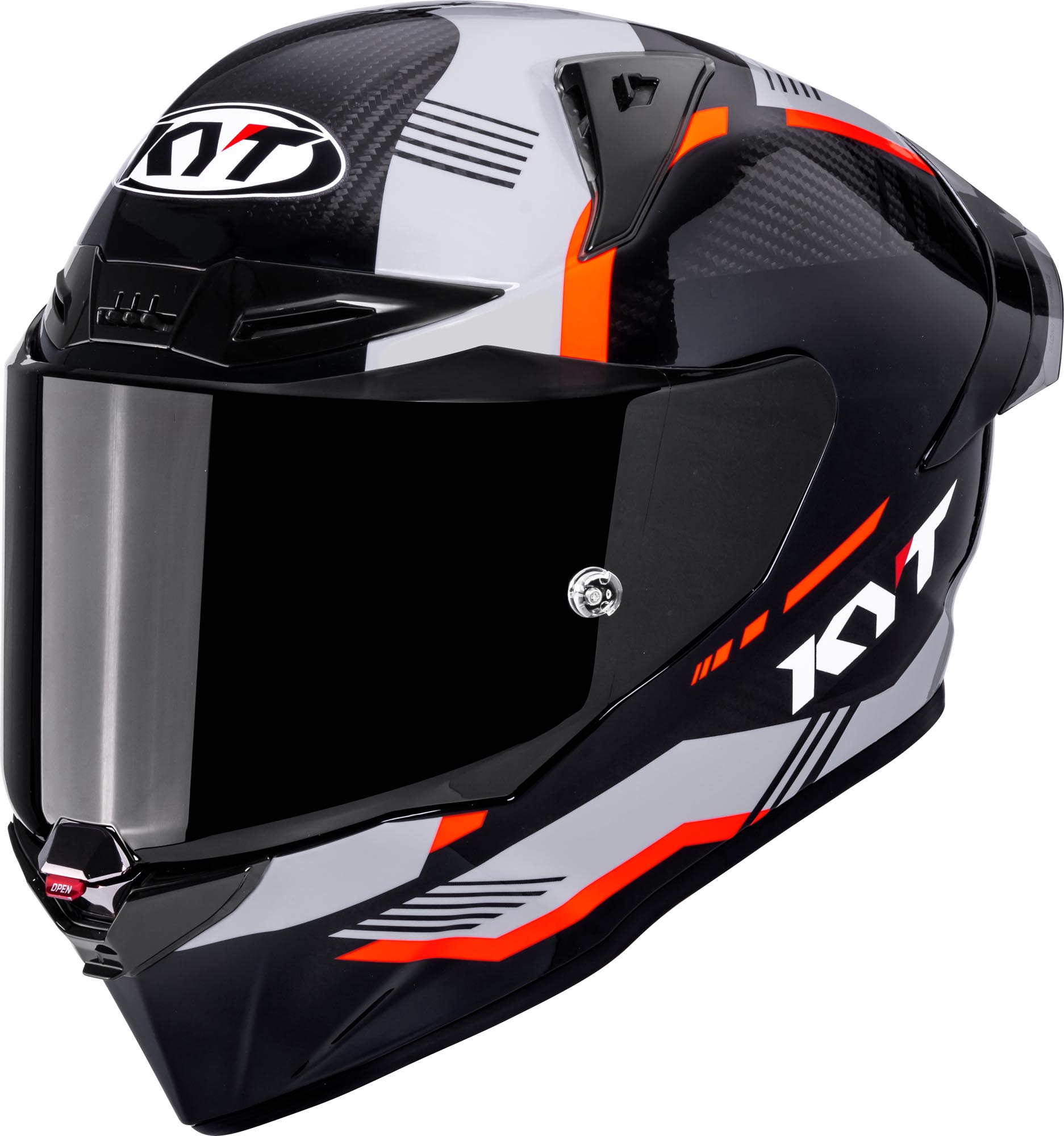
KYT’s core strength lies in delivering race-spec engineering without the luxury markup. The brand has spent years refining its aerodynamic profiles and shell geometries, resulting in helmets that compete directly with established European manufacturers at a fraction of the cost. For riders who prioritize track performance, the 2026 lineup focuses on two distinct platforms: the ultra-lightweight R1R Carbon and the aerodynamic Revo series.
KYT R1R Carbon
The R1R Carbon remains the benchmark for entry-level track day riders. Its shell is constructed from real carbon fiber, which significantly reduces weight compared to fiberglass or polycarbonate alternatives. This reduction in mass lessens neck strain during long stints on the track, allowing for sharper focus in the corners. The helmet features superior aerodynamic spoilers that stabilize the head at high speeds, reducing lift and drag. It meets rigorous safety standards, making it a reliable choice for those who need certified protection without overspending.
KYT Revo Series
The Revo series, including models like the Revo Megalodon, targets riders seeking aggressive aerodynamic performance. These helmets feature extended tail designs and optimized venting channels that pull air through the shell to cool the rider. The shell geometry is designed to slice through turbulent air, providing stability that many riders find lacking in standard street helmets. While the materials may vary between polycarbonate and composite blends depending on the specific Revo model, the focus remains on airflow management and wind noise reduction, which are critical for high-speed stability.
Racing Helmet Comparison
| Feature | KYT R1R Carbon | KYT Revo Series |
|---|---|---|
| Shell Material | Carbon Fiber | Polycarbonate / Composite |
| Weight Class | Ultra-Light | Standard / Mid-Weight |
| Aerodynamics | Spoilers for Stability | Extended Tail for Drag Reduction |
| Ventilation | Standard Track Vents | Optimized Airflow Channels |
| Primary Use | Track Days / Time Trials | High-Speed Street / Track |
| Model | Shell | Weight | Ventilation |
|---|---|---|---|
| R1R Carbon | Carbon | Light | Standard |
| Revo Megalodon | Composite | Mid | High |


As an Amazon Associate, we may earn from qualifying purchases.
Best street and touring options
KYT Helmet works best as a clear sequence: define the constraint, compare the realistic options, test the tradeoff, and choose the path with the fewest hidden costs. That order keeps the advice usable instead of decorative. After each step, pause long enough to check whether the recommendation still fits the reader's actual situation. If it depends on perfect timing, unusual access, or a best-case budget, include a simpler fallback.
The simplest way to use this section is to write down the real constraint first, compare each option against it, and choose the path that still works outside ideal conditions.
How KYT compares to HJC and LS2
KYT Helmet works best when the purchase path is explicit. Verify the source, compare the offer against real alternatives, check the total cost, and confirm what happens after payment before you decide. After each comparison, write down the one risk that would change your mind. If the seller, condition, support, warranty, shipping, or upkeep still feels uncertain, resolve that question before moving to checkout.
| Factor | What to check | Why it matters |
|---|---|---|
| Fit | Match the option to the primary use case. | A good deal still fails if it does not fit the job. |
| Condition | Verify age, wear, and service history. | Hidden condition issues erase upfront savings. |
| Cost | Compare purchase price with likely upkeep. | The cheapest option is not always the lowest-cost option. |
Frequently asked questions about KYT
Which is better, HJC or KYT?
HJC leads in premium materials and brand prestige, while KYT wins on raw value. For riders prioritizing budget-friendly safety with solid ECE or DOT certifications, KYT offers comparable protection at a fraction of the cost. HJC remains the choice for those seeking high-end carbon shells and extensive dealer networks.
Why is KYT so cheap?
KYT maintains low prices by operating with a lean supply chain and focusing on high-volume production rather than luxury branding. They utilize standard thermoplastic and composite materials that meet safety standards without the markup of heritage brands. This strategy allows them to offer features like quick-release visor systems at entry-level price points.
Which is better, LS2 or KYT?
The choice between LS2 and KYT often comes down to fit and specific model features. Both brands compete directly in the affordable mid-range segment, offering ECE 22.06 compliant helmets. Riders should prioritize the specific shell shape and ventilation design of individual models, such as the KYT K-802i or LS2 FF350, over brand preference alone.
What are the upcoming models of KYT helmets?
KYT is expanding its lineup with the 2026 Spirit of Speed Initiative, featuring new graphics and updates to existing shells. Notable releases include the KYT Revo Megalodon, designed for aggressive aerodynamic performance, and the R1R Carbon, which introduces a full carbon shell construction to their racing series. These models aim to bridge the gap between street utility and track readiness.
No comments yet. Be the first to share your thoughts!